Our wool
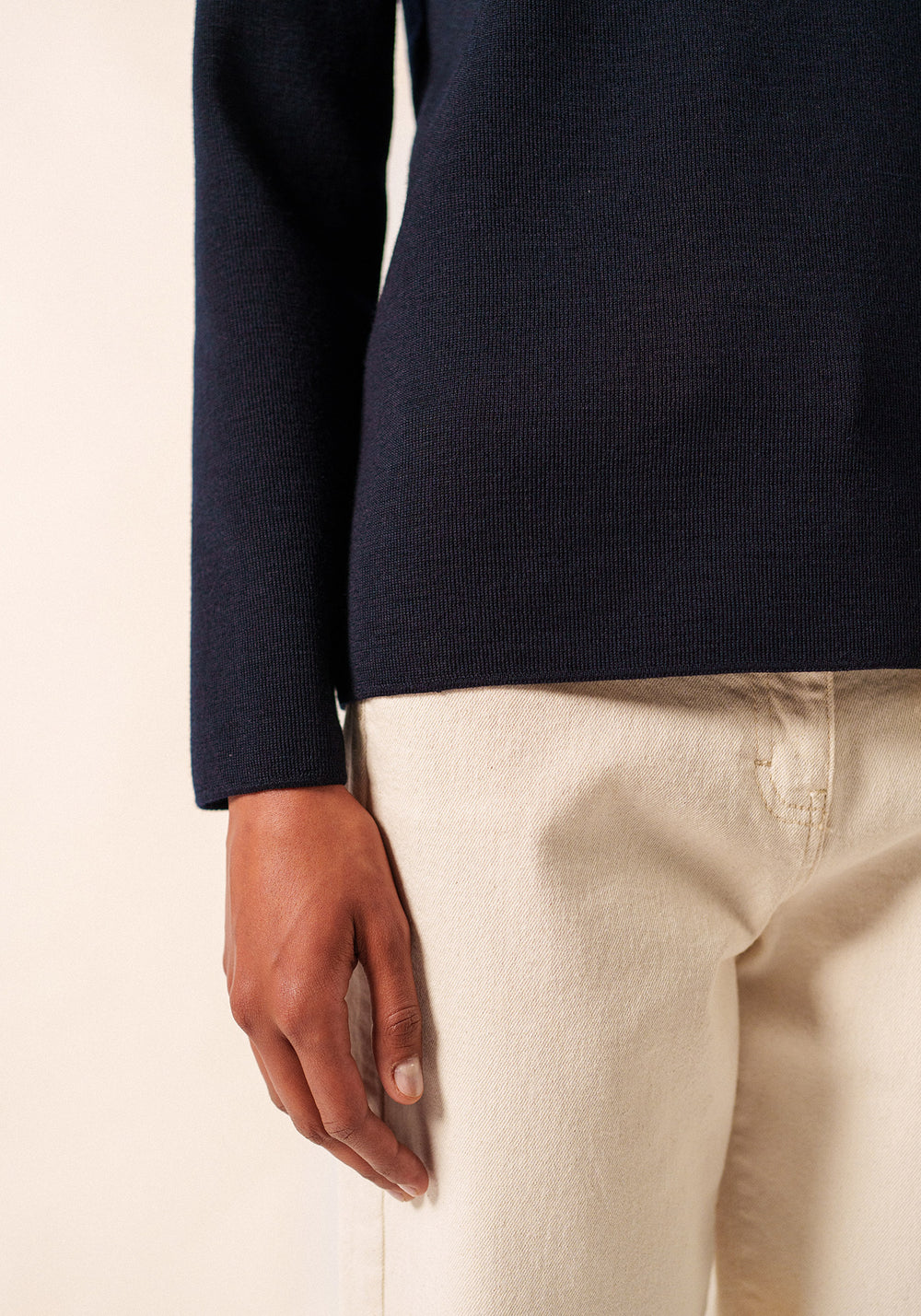
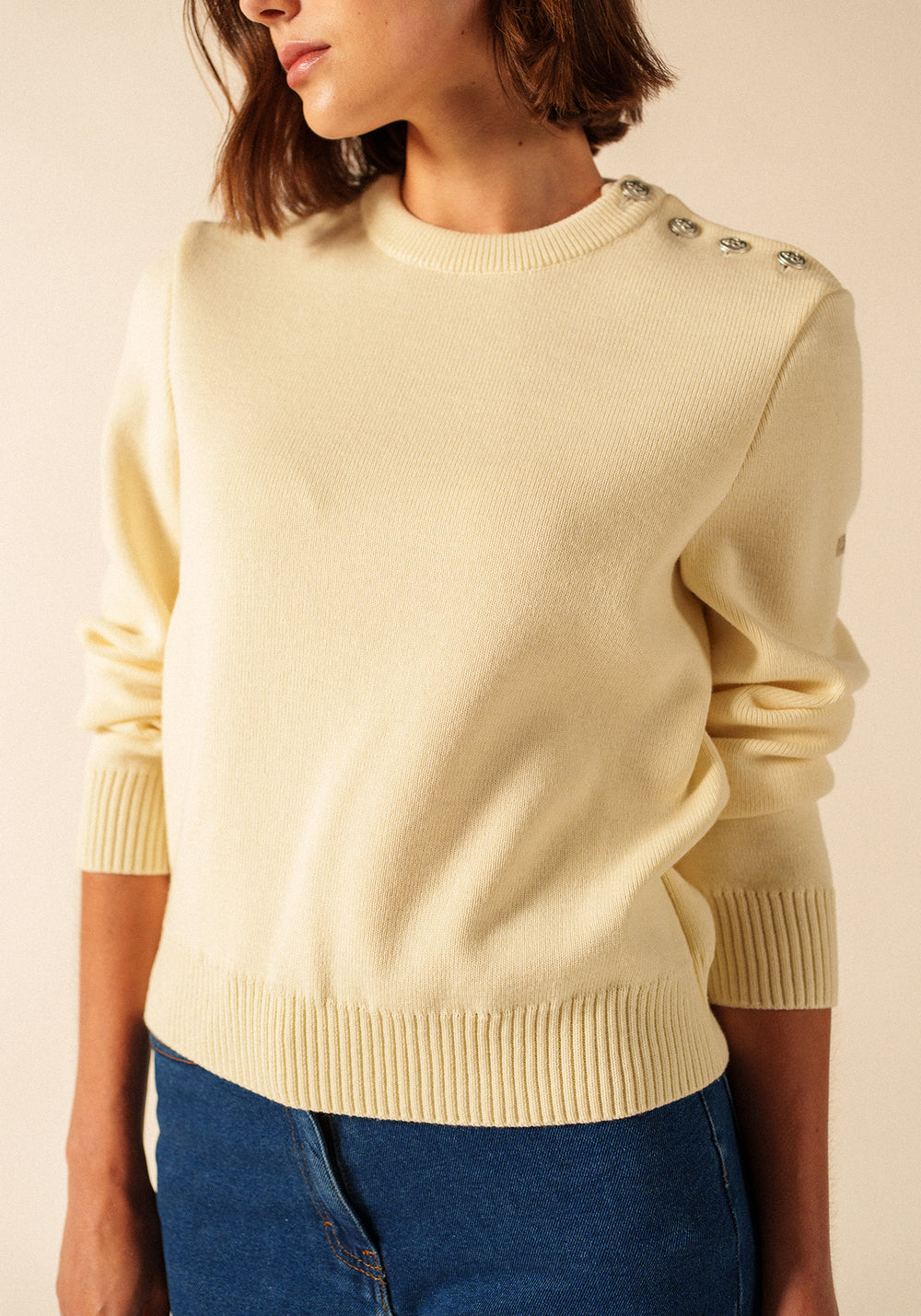
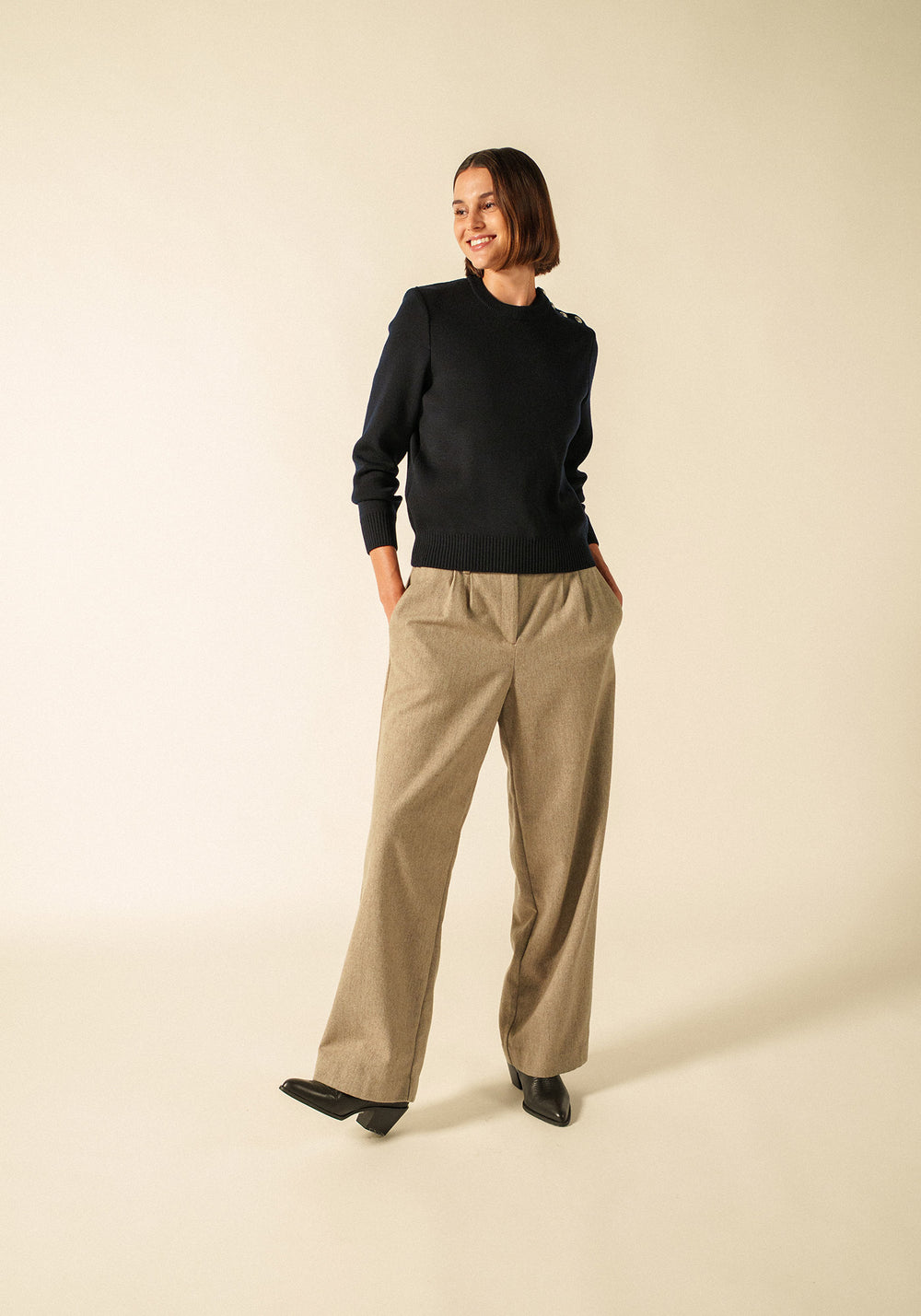
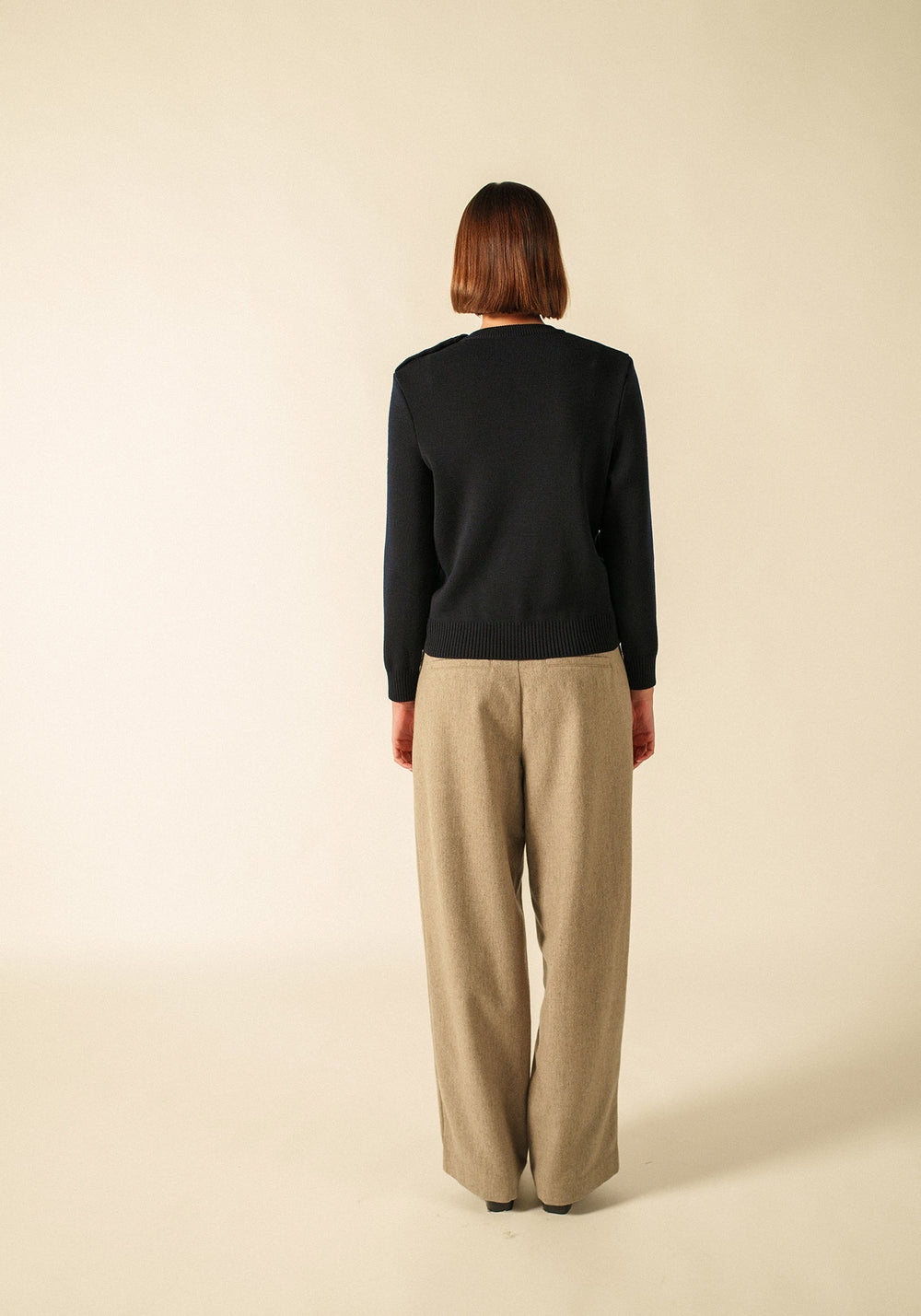
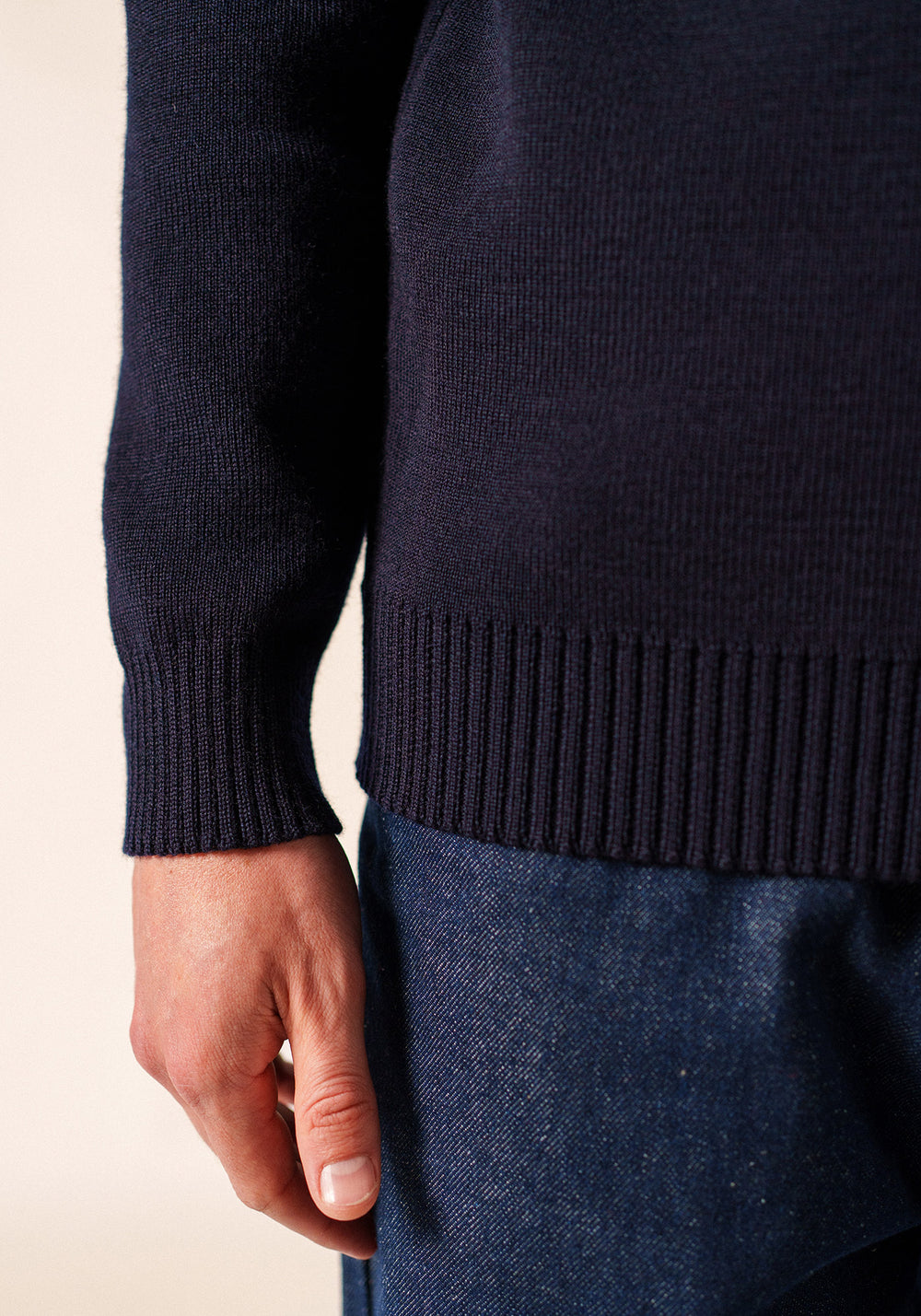
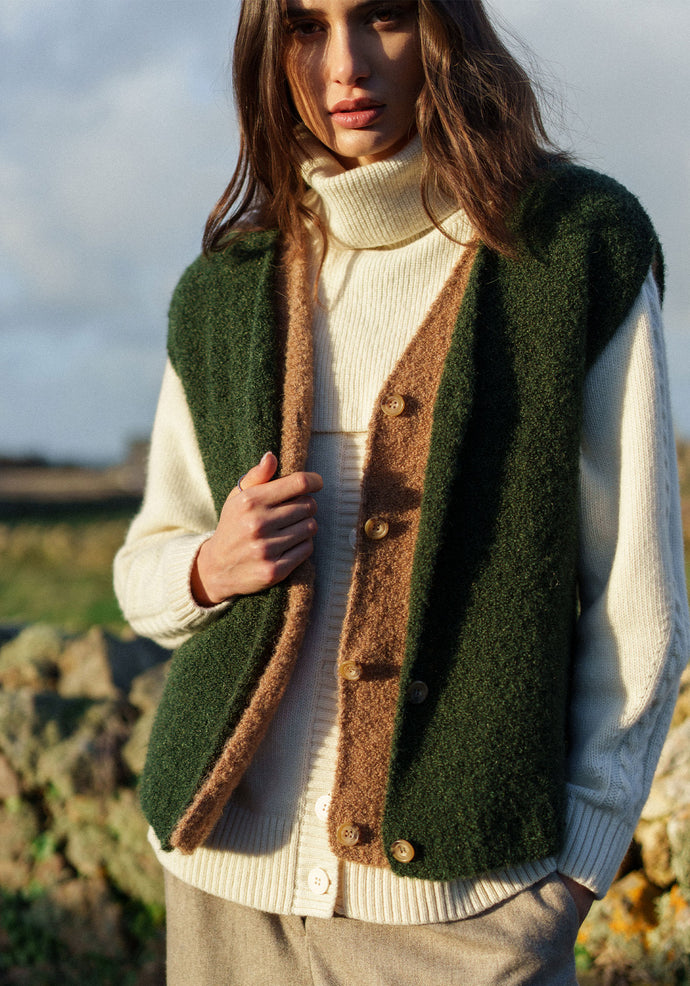
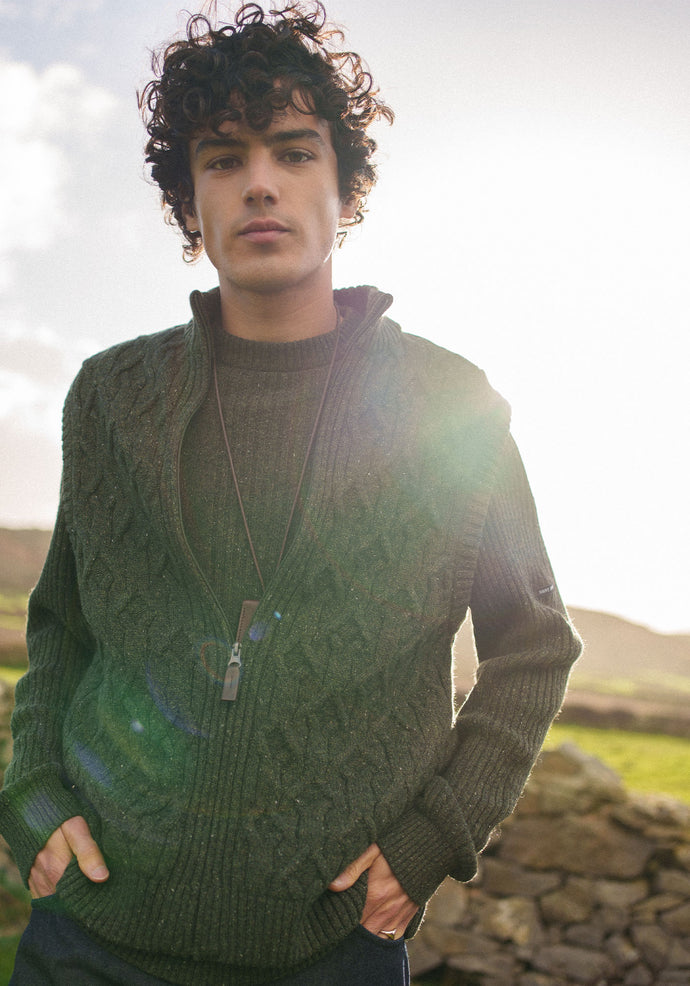
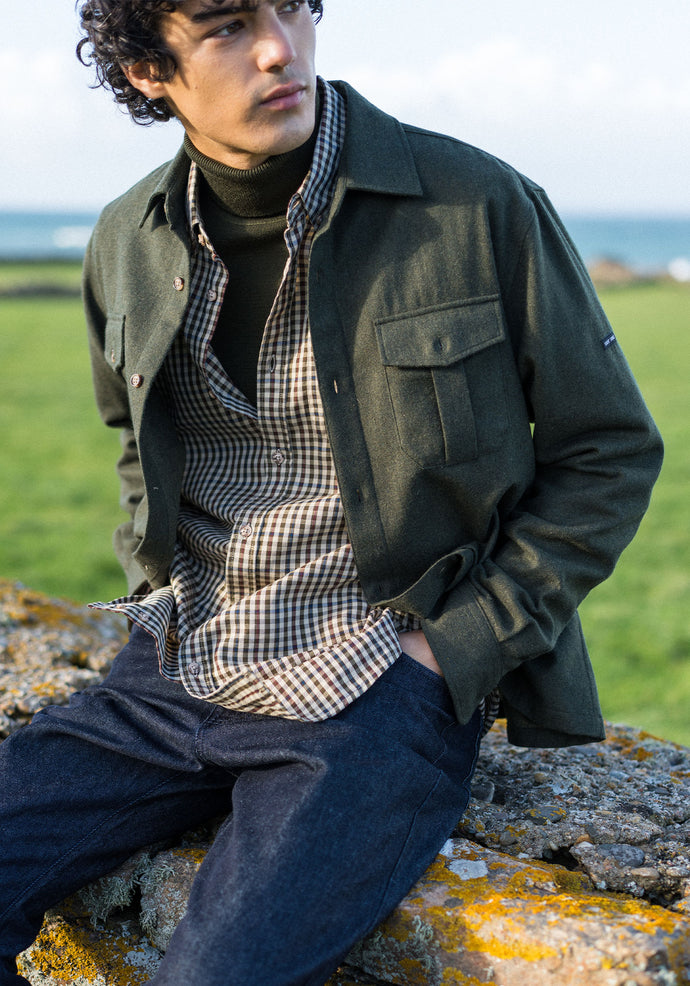
The exceptional quality of SAINT JAMES clothing stems from the expertise of our artisans and our rigorous selection of raw materials. We use only pure new wool sourced from the finest breeds of sheep to craft our iconic Breton fisherman jumpers, cardigans, and coats. Each piece reflects centuries of know-how, meticulous craftsmanship, and a commitment to lasting elegance.
Where does the wool in SAINT JAMES clothing come from?
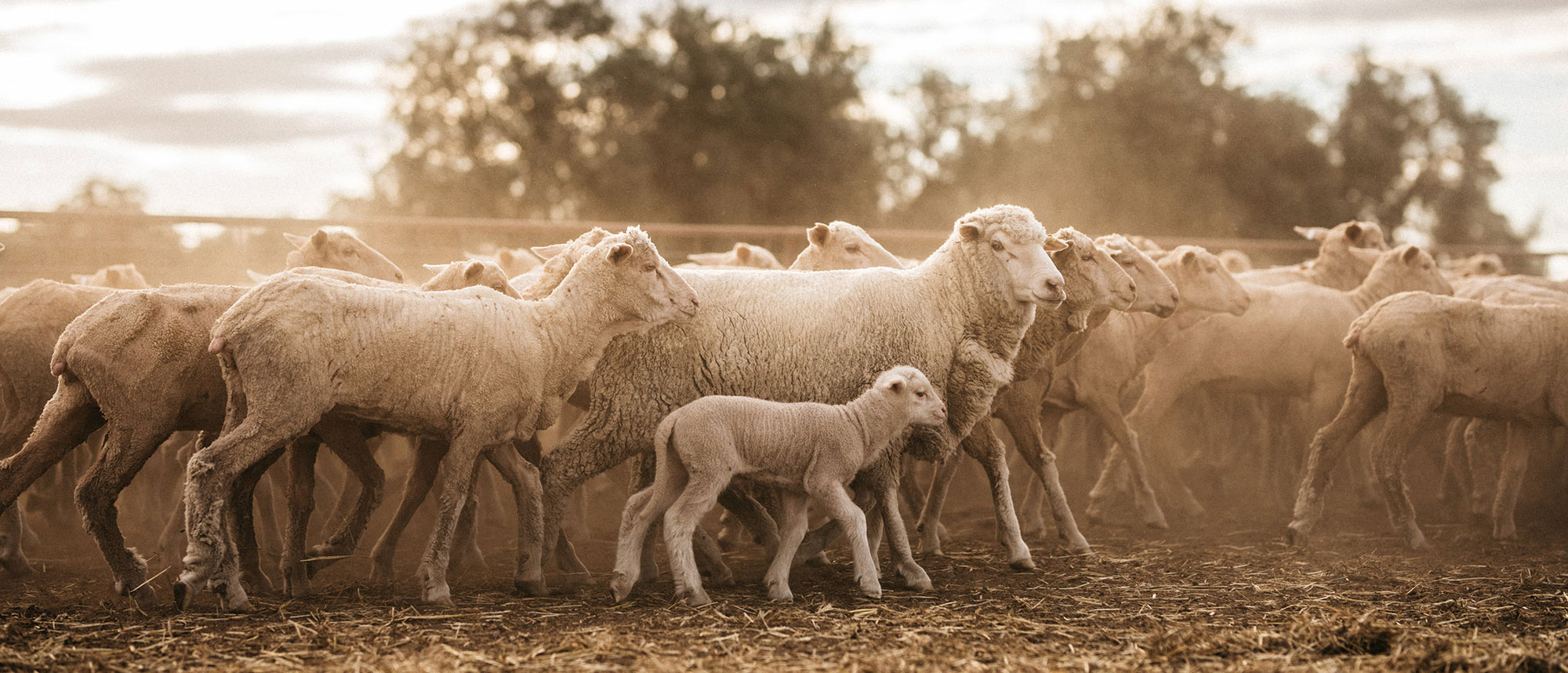
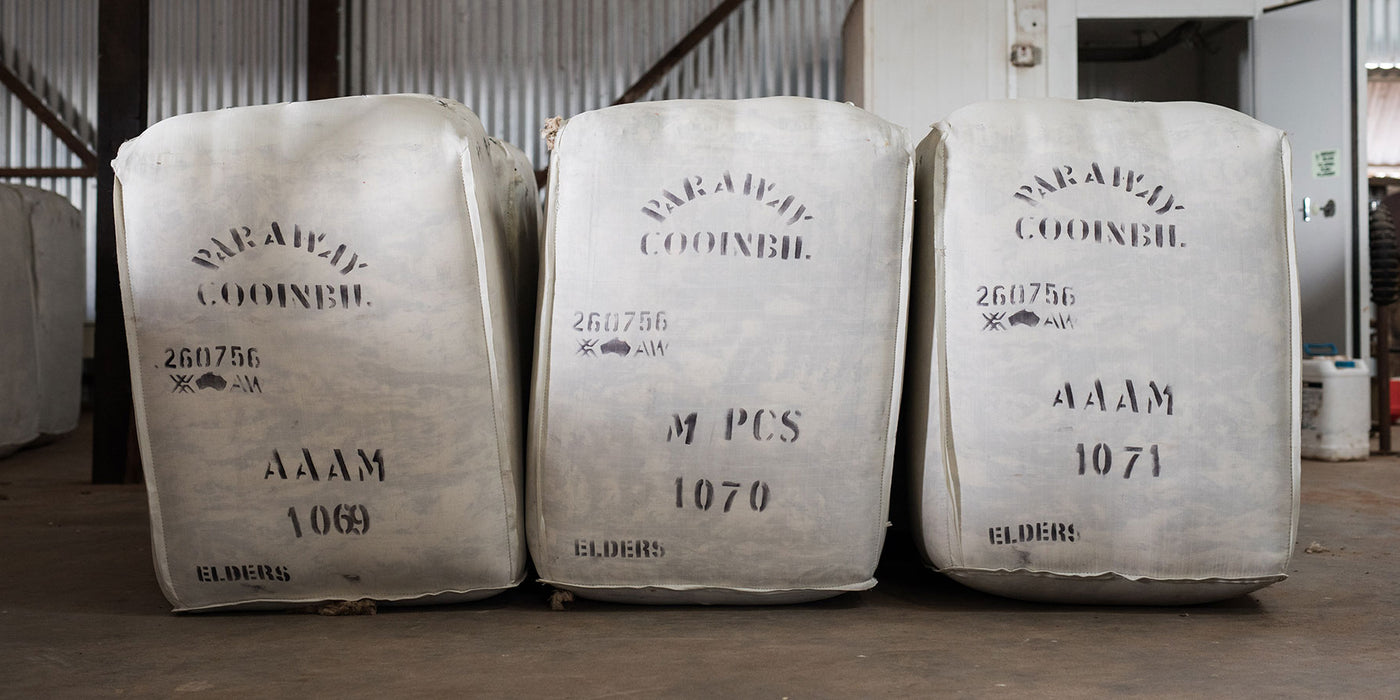
At SAINT JAMES, our wool is carefully sourced from Australia, New Zealand, and South America, exclusively using pure new wool obtained directly from the shearing of healthy, living sheep. We never use inferior wool recovered from slaughtered animals, ensuring the highest quality for our iconic Breton fisherman jumpers, cardigans, and coats.
Raw wool is naturally greasy due to the protective lanolin secreted by the sheep. It undergoes a meticulous washing process, eliminating oils, dust, soil, and plant debris. This process results in about a 40% loss: producing 1 kg of clean wool requires 1.8 kg of raw wool.
The next stages—carding and combing—disentangle and align the fibers while removing remaining impurities. The wool is then formed into ribbons ready for dyeing. For large volumes (over 1,000 lbs), the ribbons are dyed directly in massive vats. For smaller quantities, the wool is first spun and wound onto cones
before dyeing, ensuring perfect color consistency.
Our wool is spun in Europe, mainly in Italian spinning mills, and delivered to our workshops in cones. Knitting engineers carefully inspect every cone before feeding the yarn into our state-of-the-art knitting machines. All wool is stored under strict climate-controlled conditions to preserve its quality.
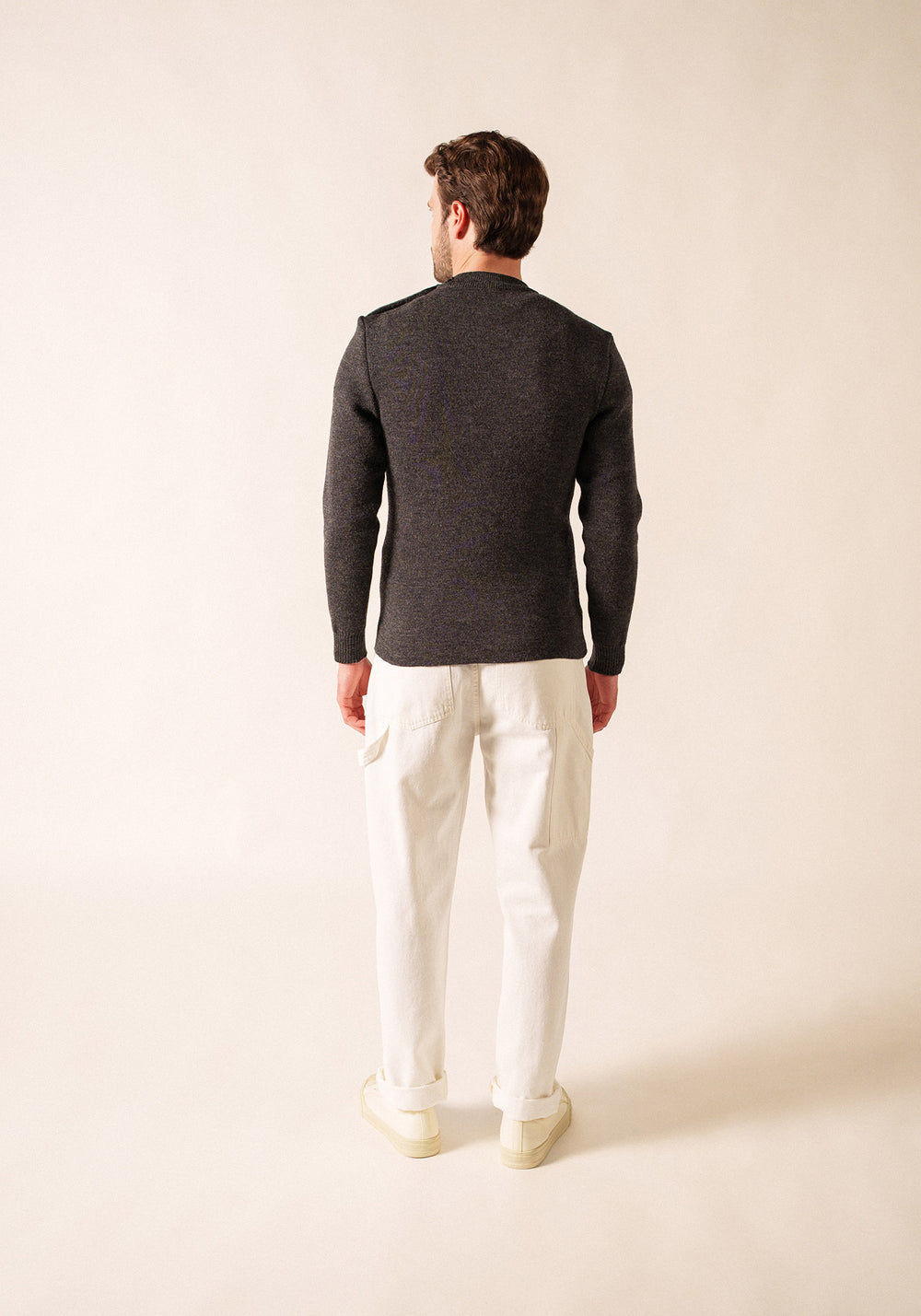
In 2020, SAINT JAMES joined the French Tricolor collective, an initiative dedicated to reviving and promoting the French wool industry from shearing to knitting. To celebrate this milestone, we launched two exclusive styles: a men’s sailor jumper and a women’s Breton jumper in the Spring-Summer 21 Collection, highlighting our commitment to sustainable, high-quality craftsmanship.
How our iconic Matelot jumper in pure new wool is made
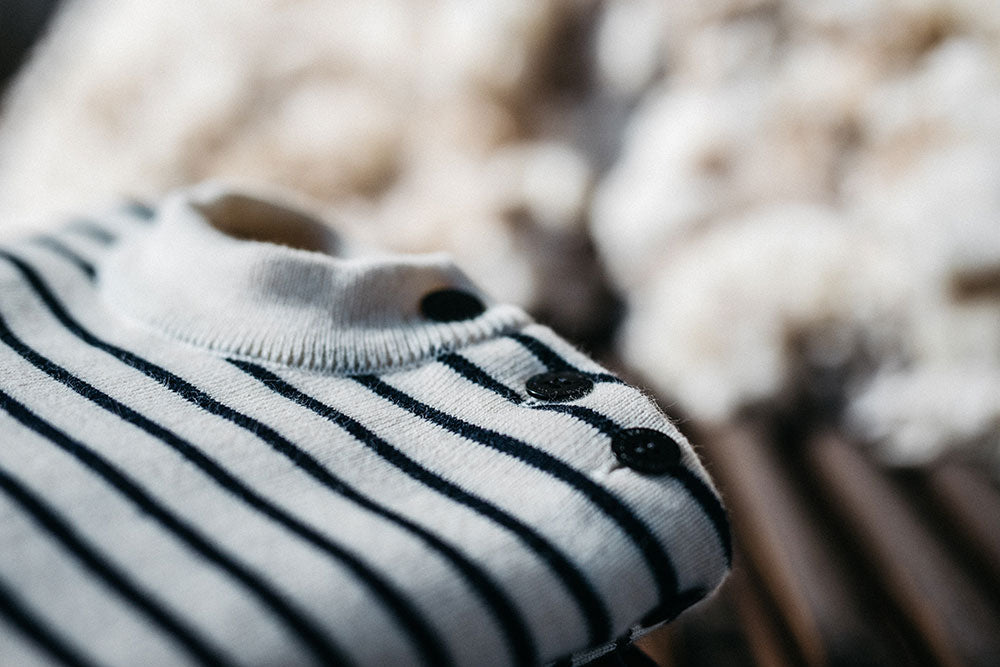
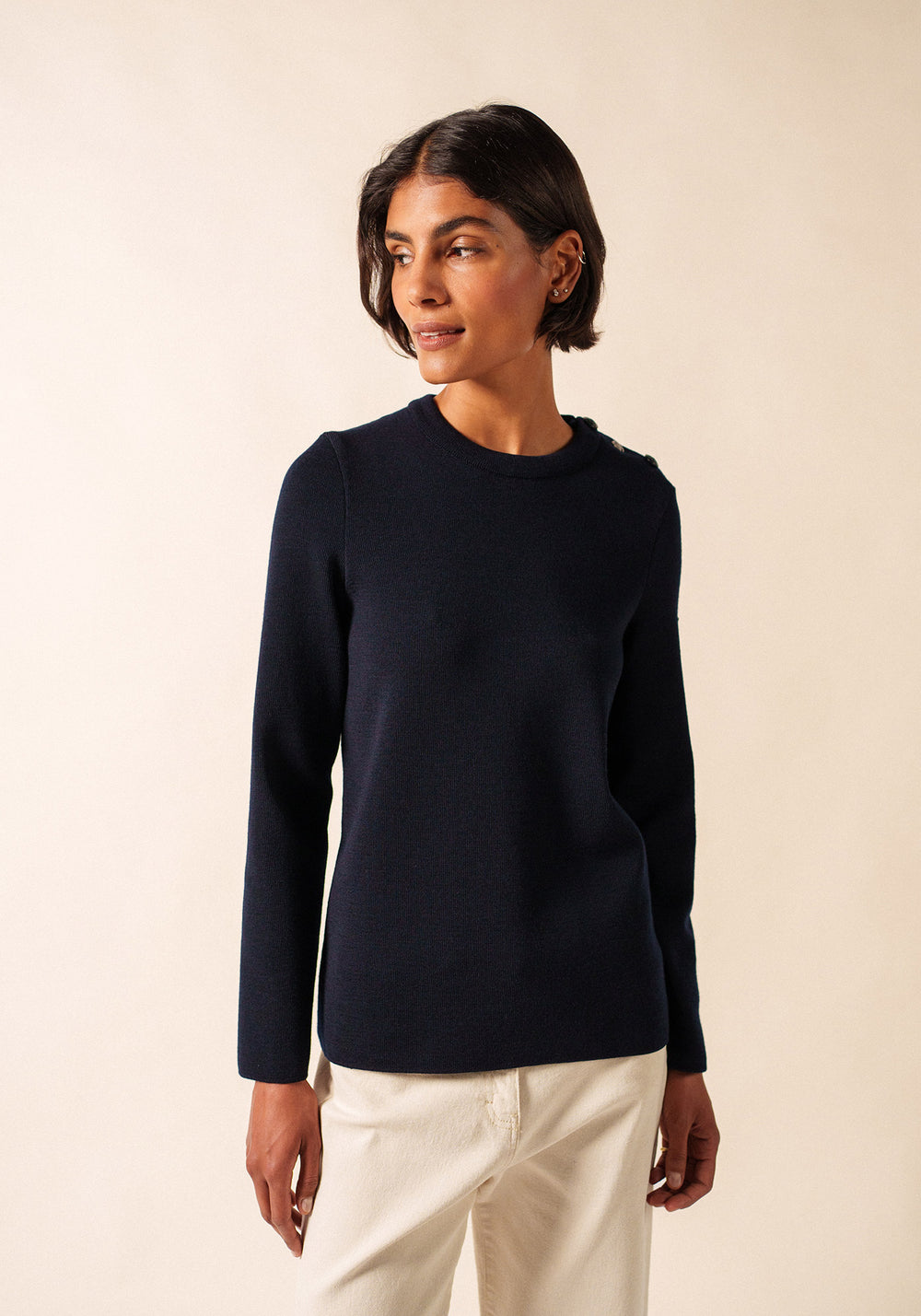
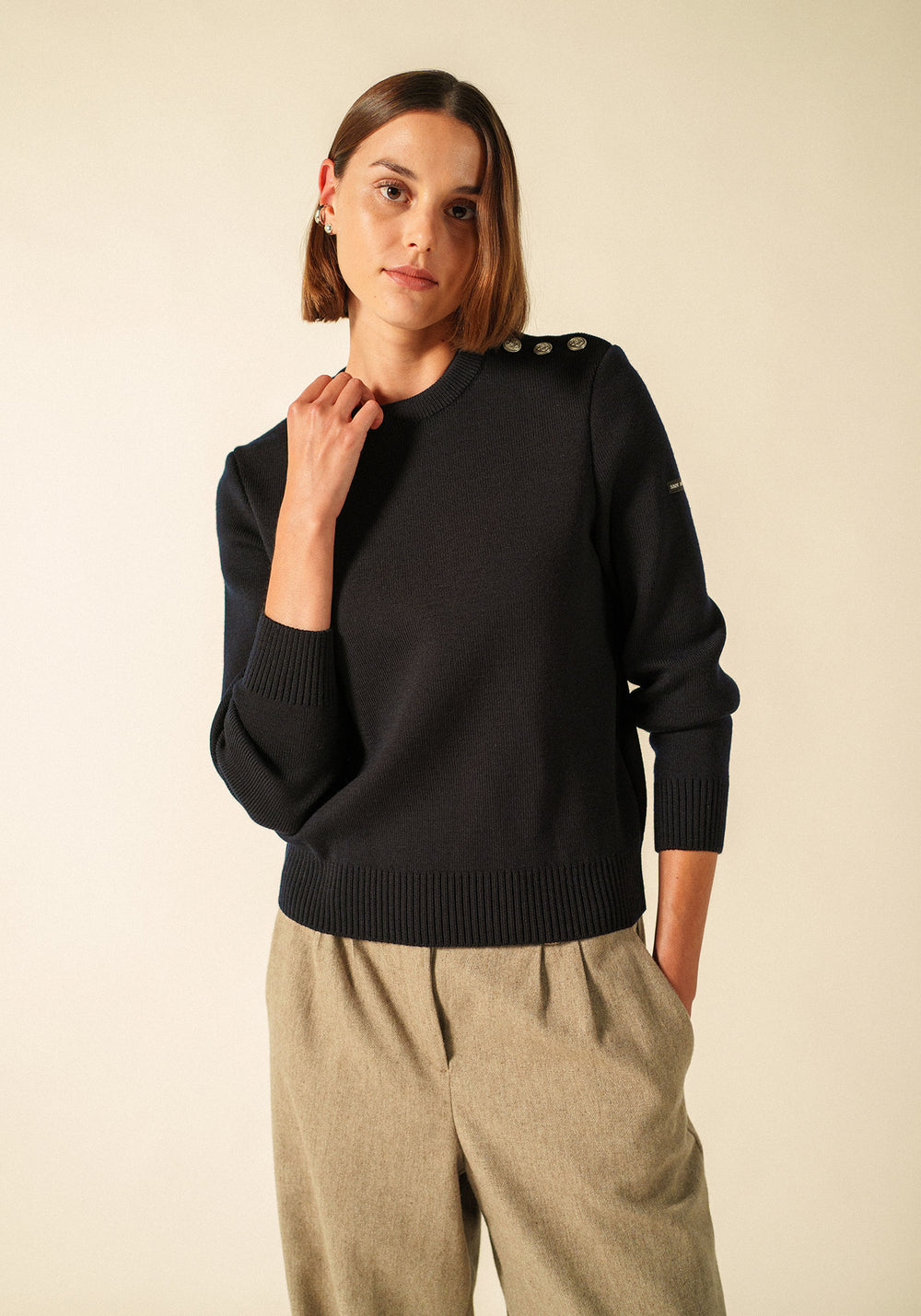
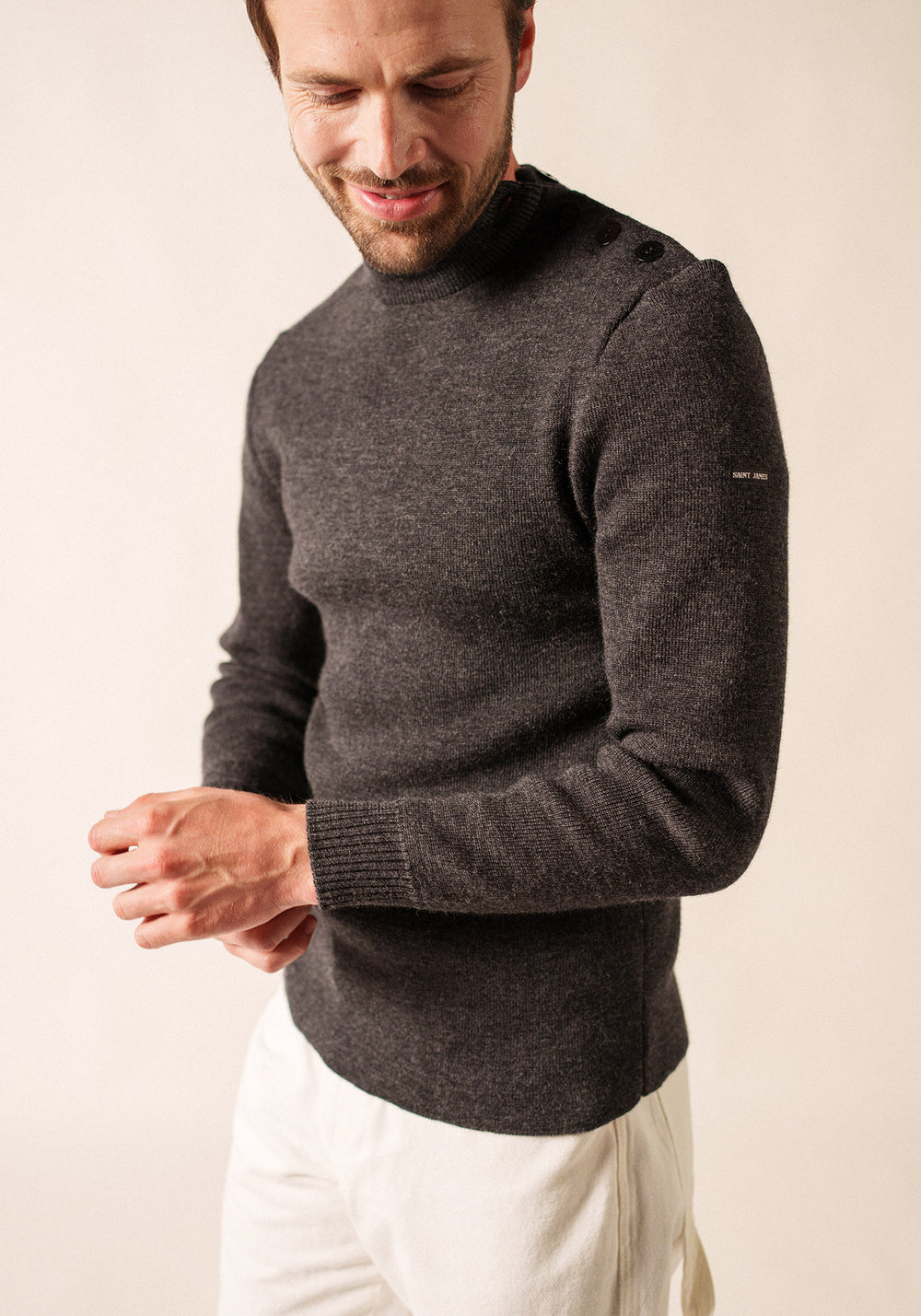
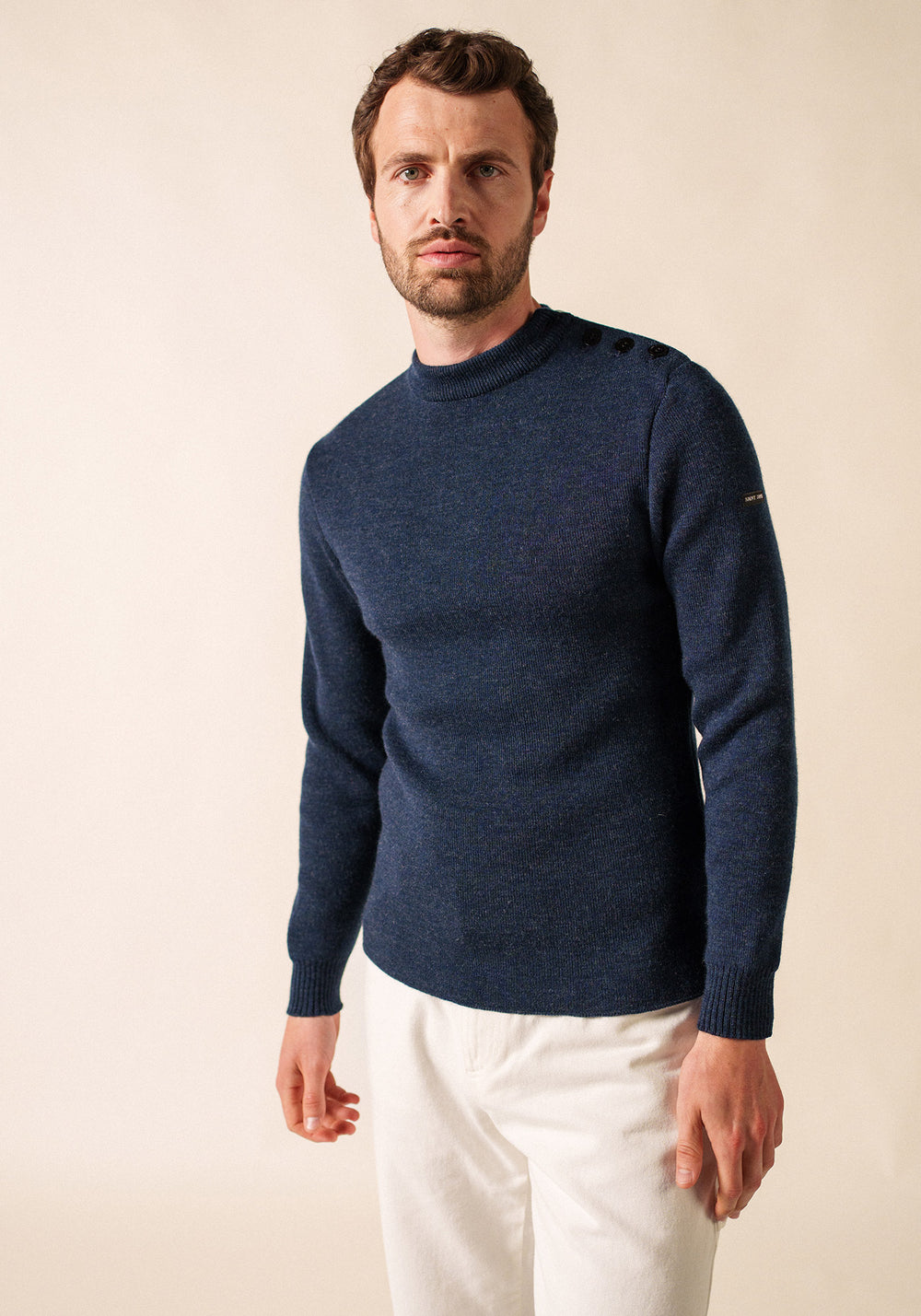
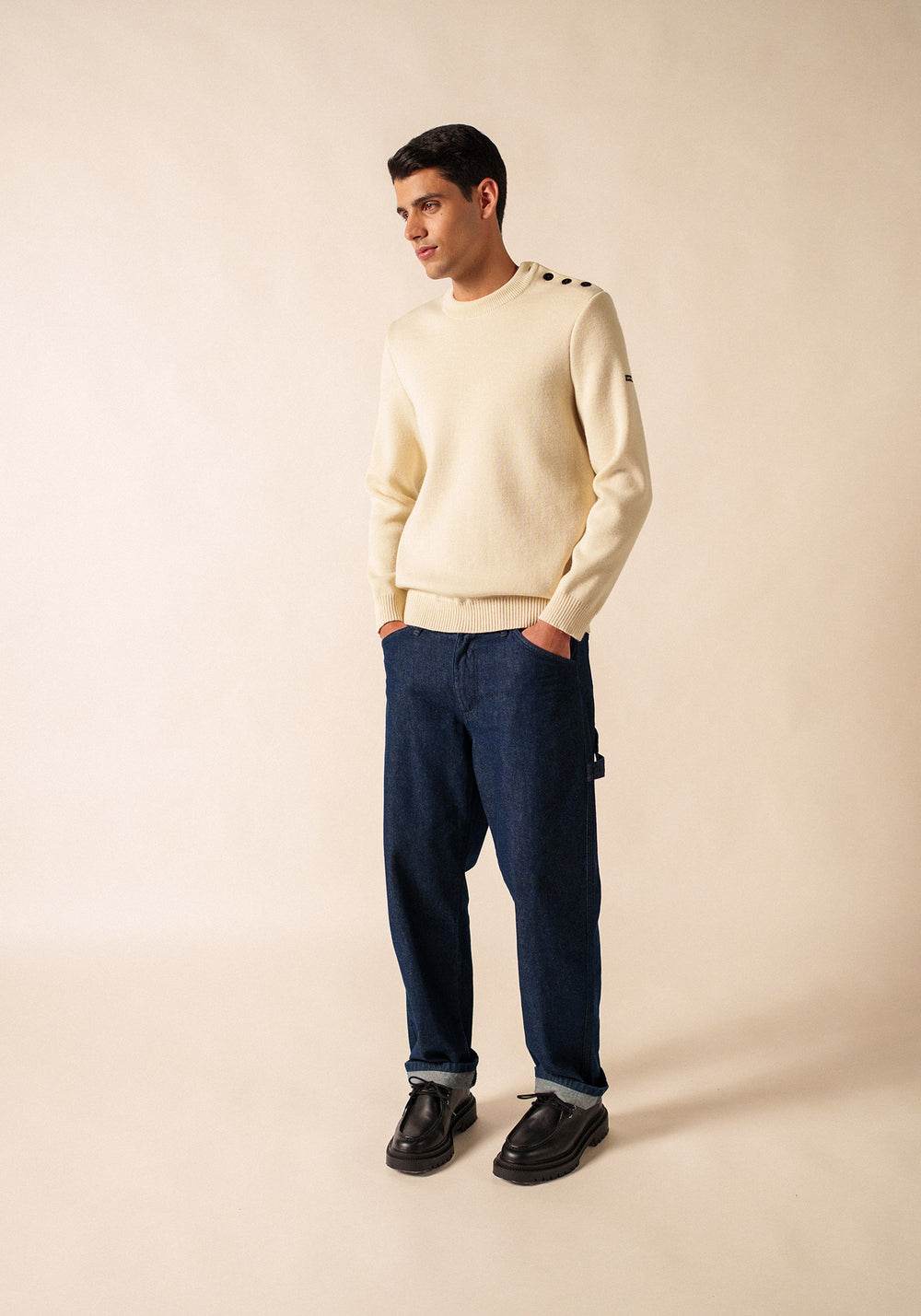
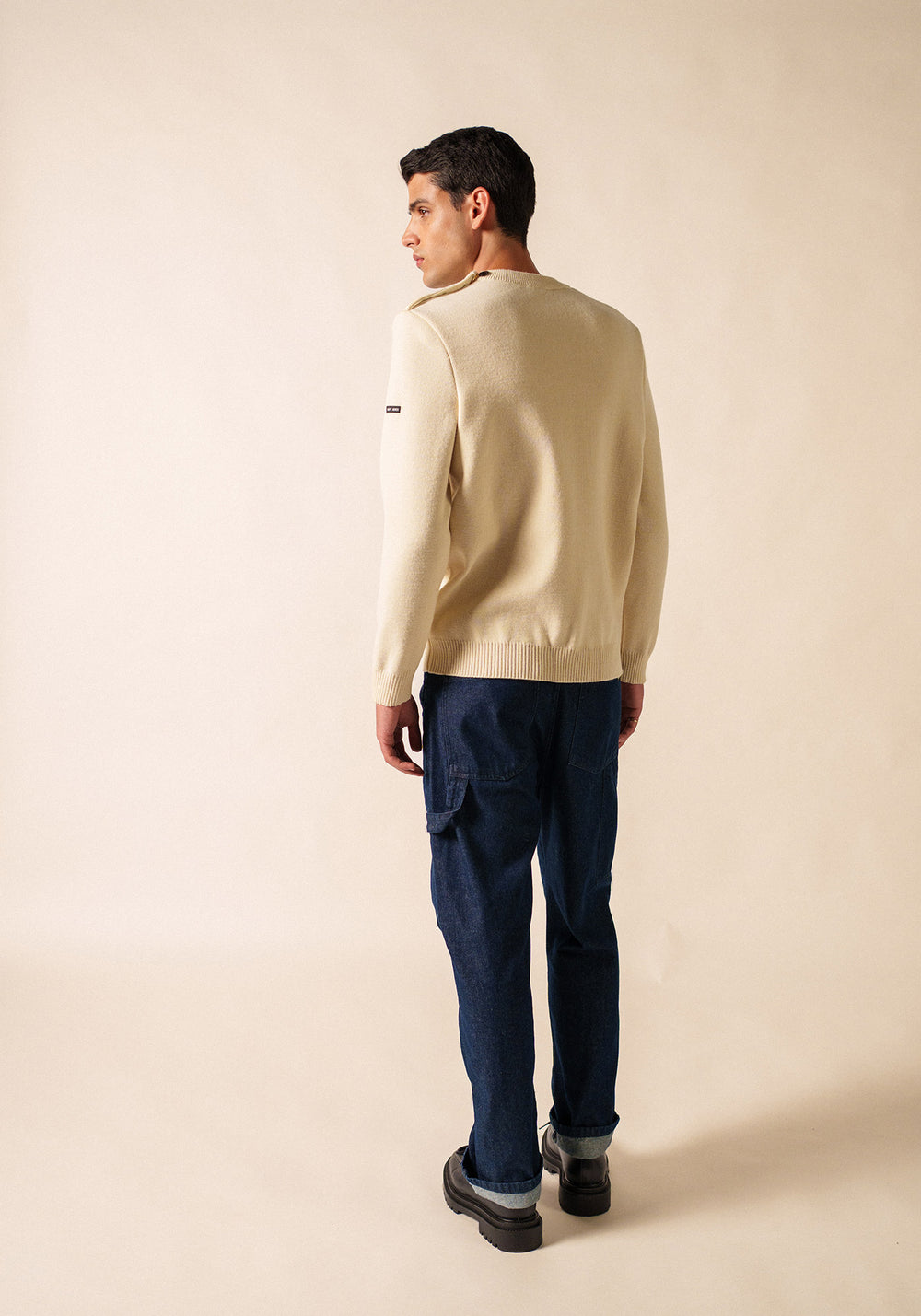
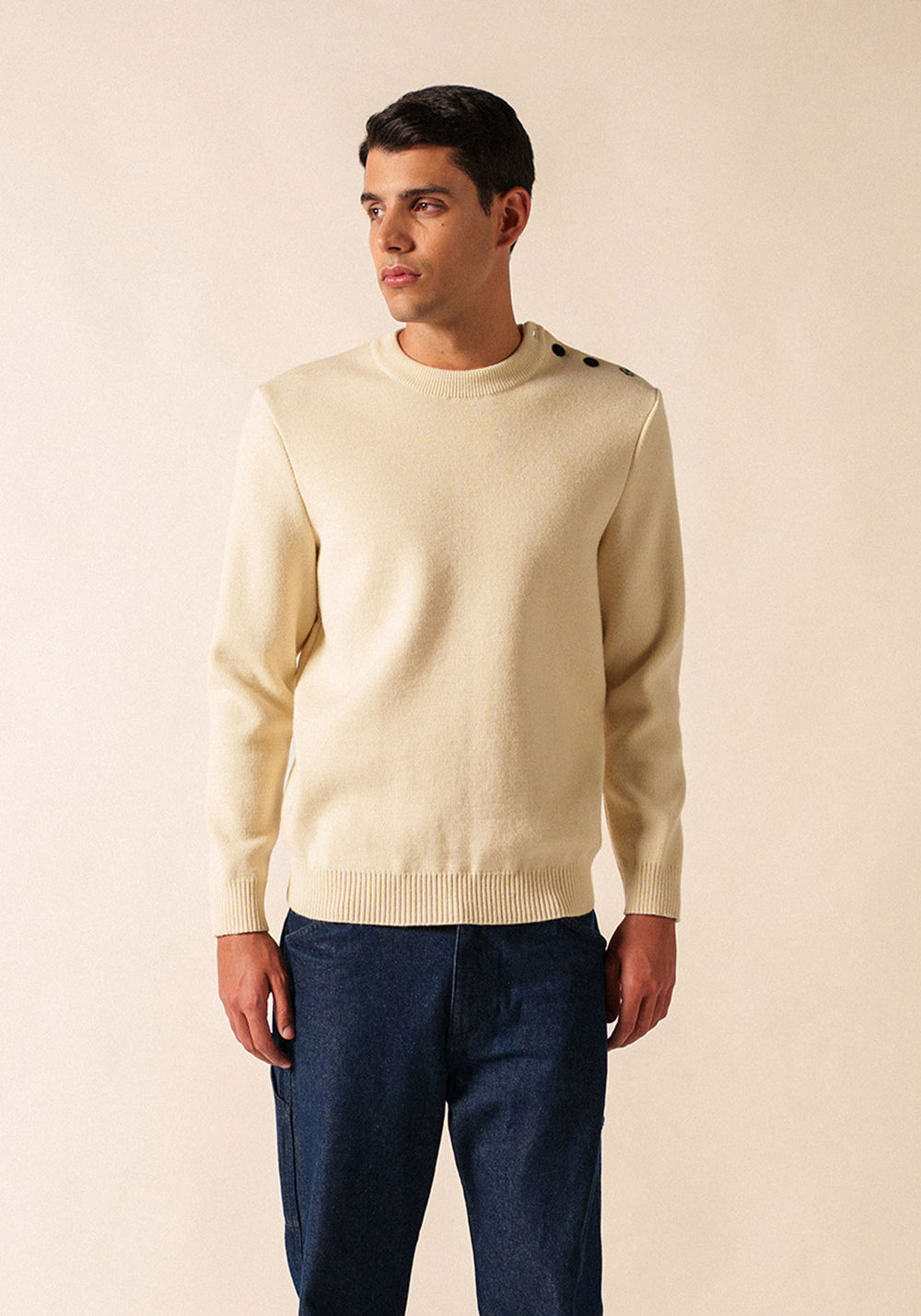
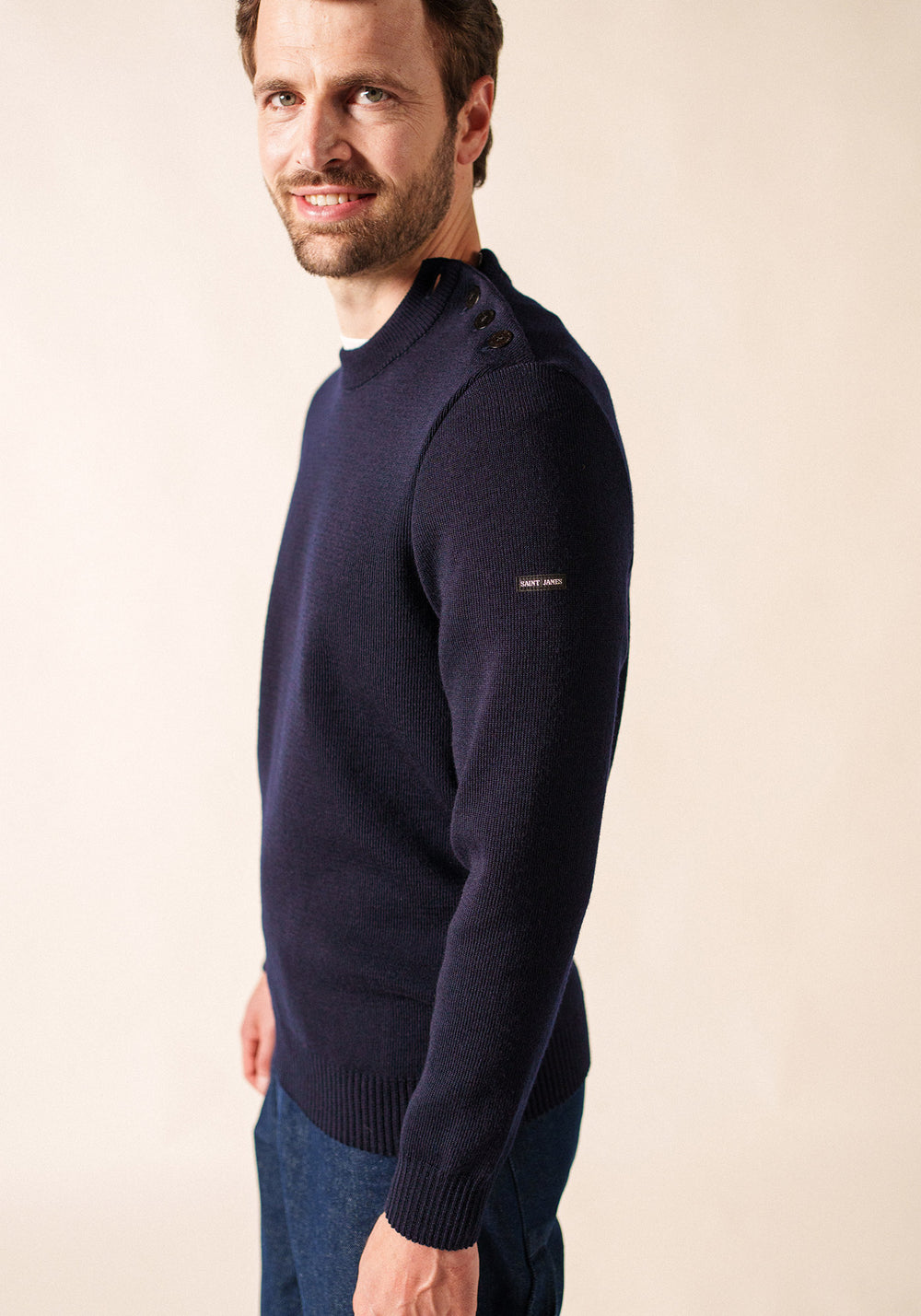
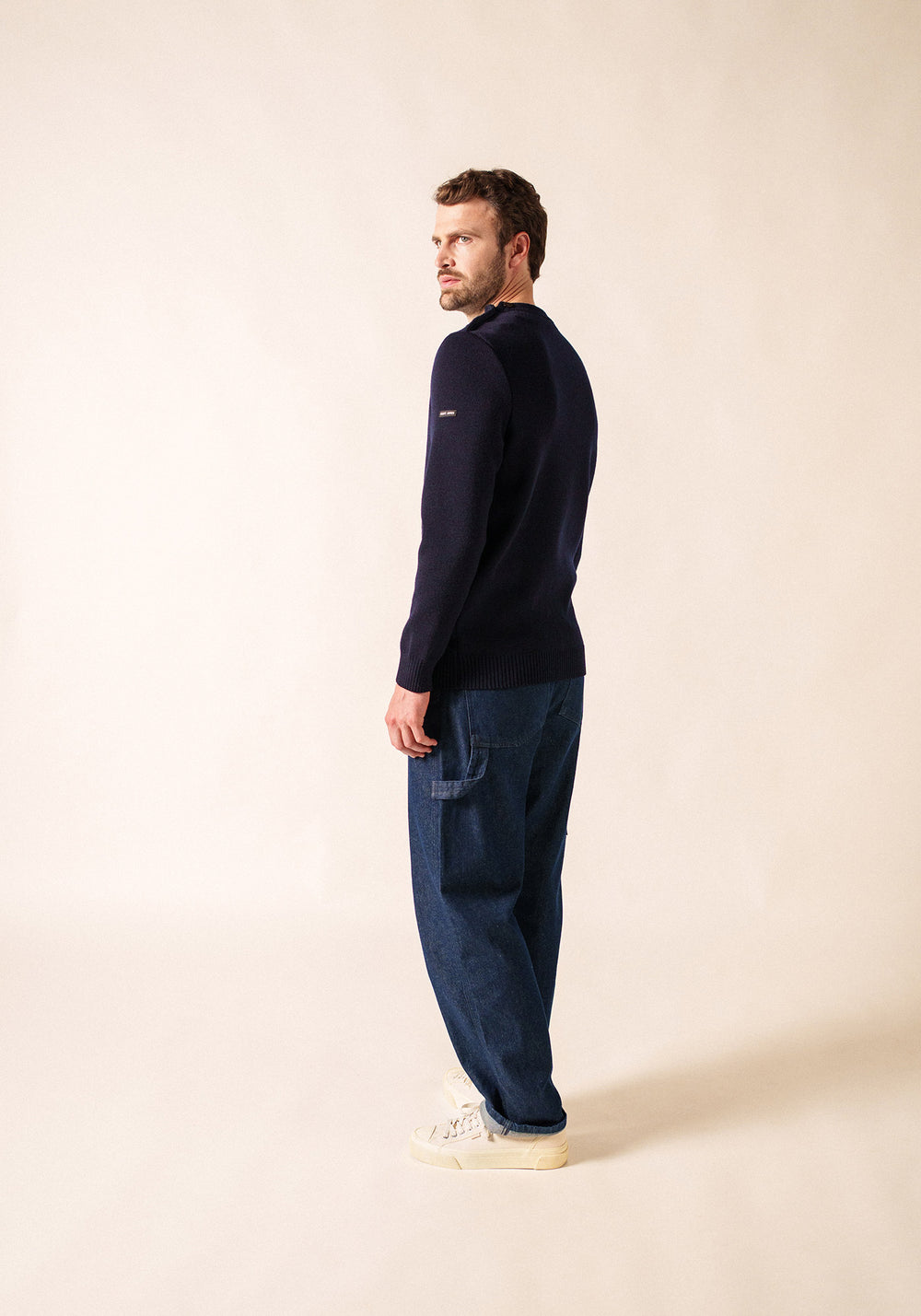
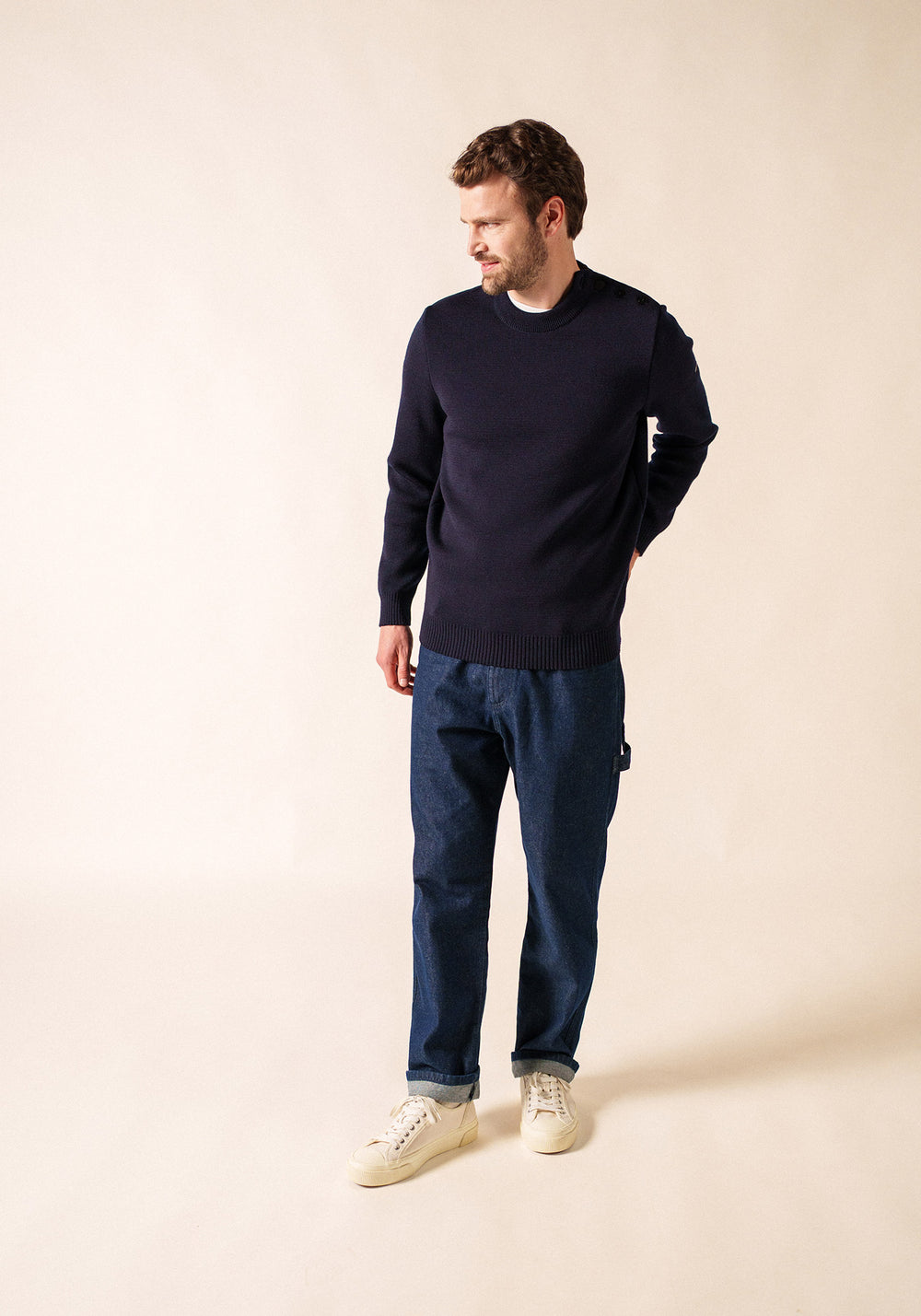
Crafting a Matelot jumpers is a testament to Saint James’ commitment to artisanal excellence. Each sweater requires no less than 23 yards of pure new wool, meaning the fleece of a single sheep can produce three Matelot sweaters.
Once completed, the jumper weighs approximately 2 lbs and undergoes 18 meticulous stages of preparation, from knitting to final packaging, ensuring every detail meets our high standards.
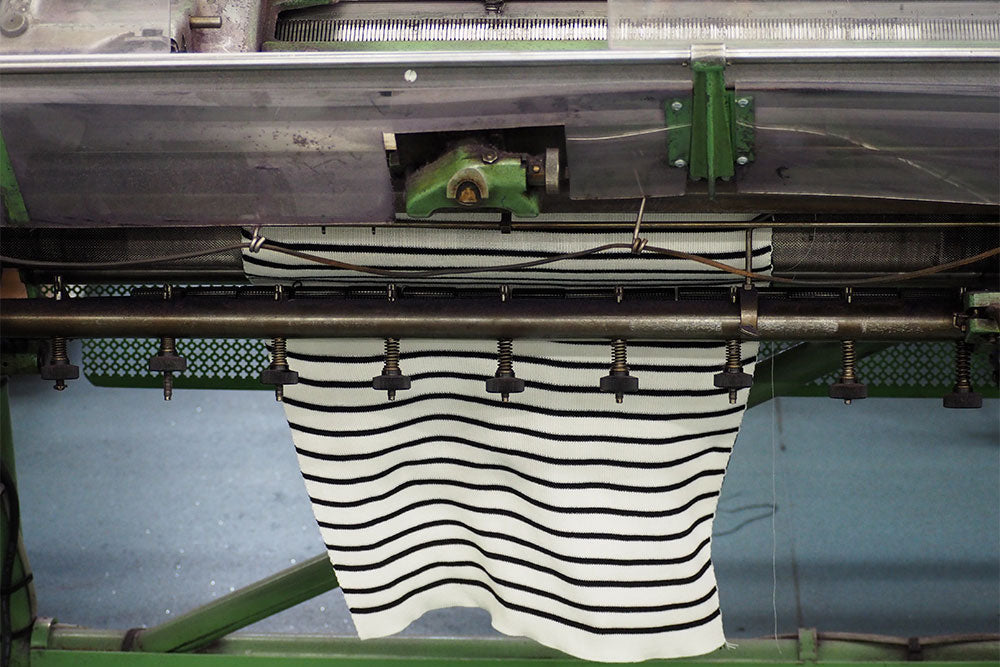
The process begins with knitting the wool into panels on our specialized looms. Every loom is configured and supervised by our master knitters, whose expertise ensures precision at every step. After knitting, the panels are stabilized by steam treatment, except for the authentic Matelot jumper, where stabilization is achieved by flattening the panels on racks for 72 hours. This careful method preserves the wool’s natural elasticity and ensures the jumper retains its iconic shape and comfort.
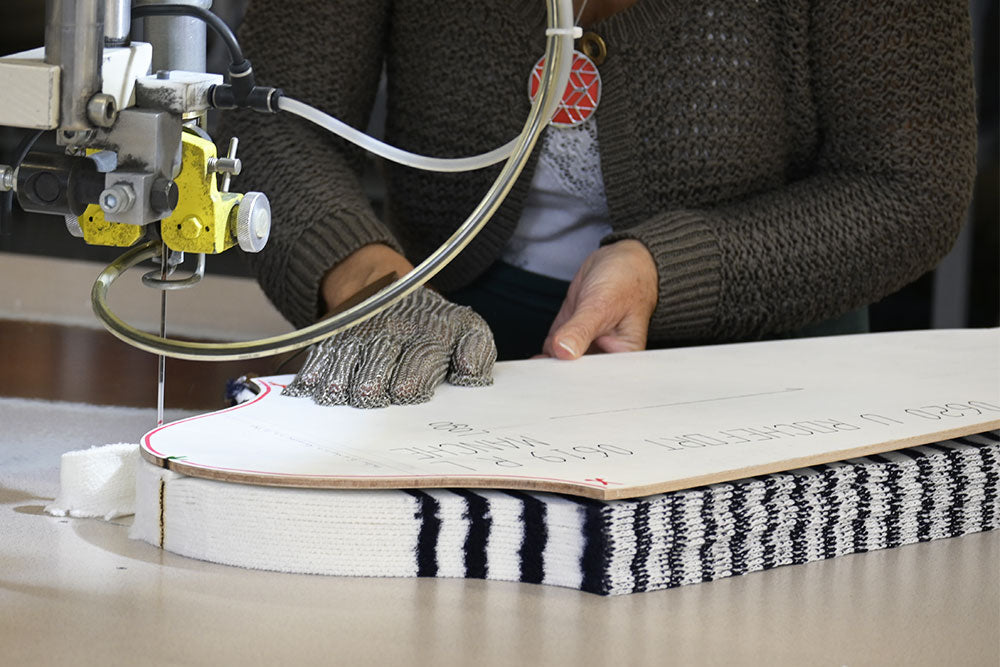
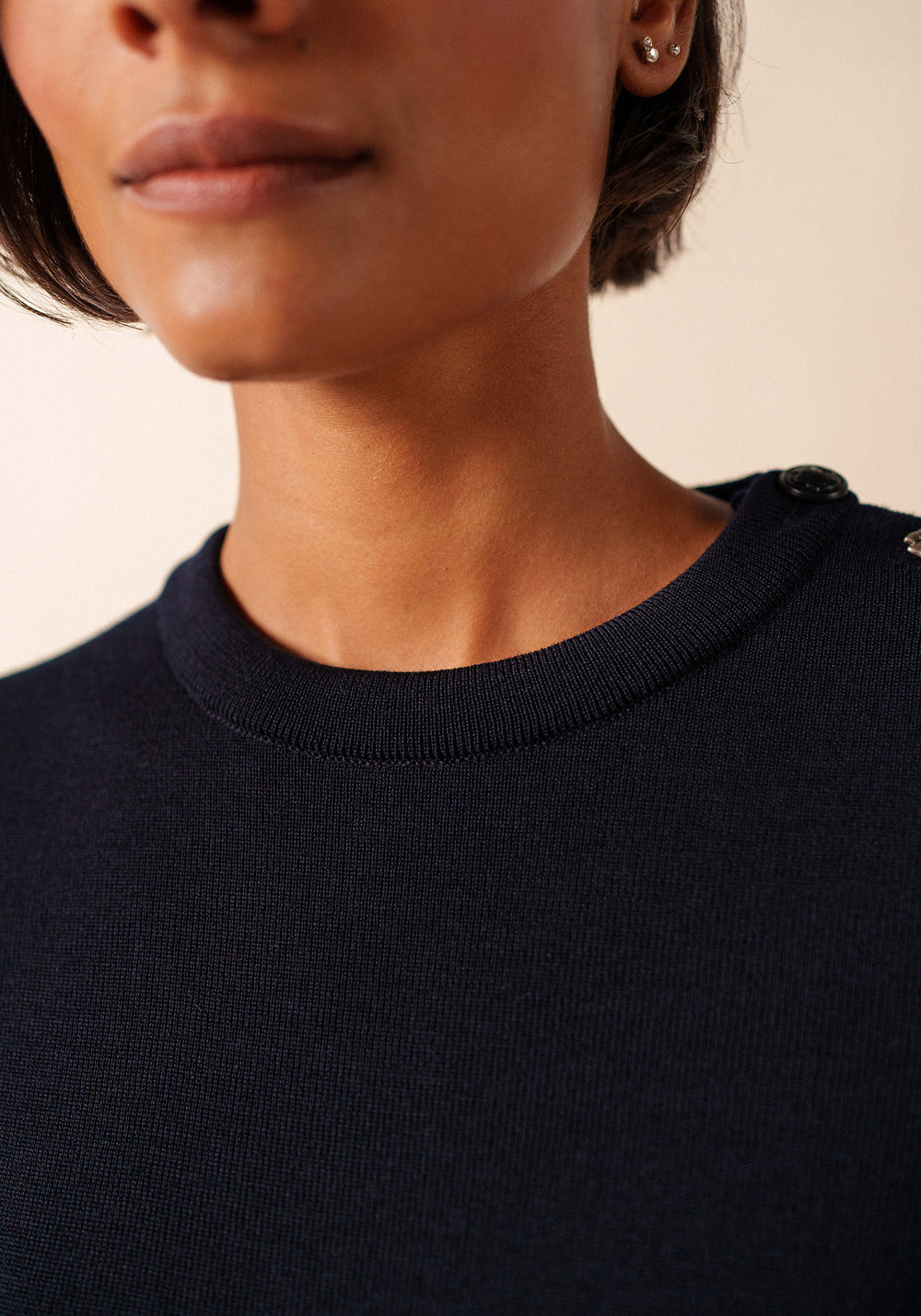
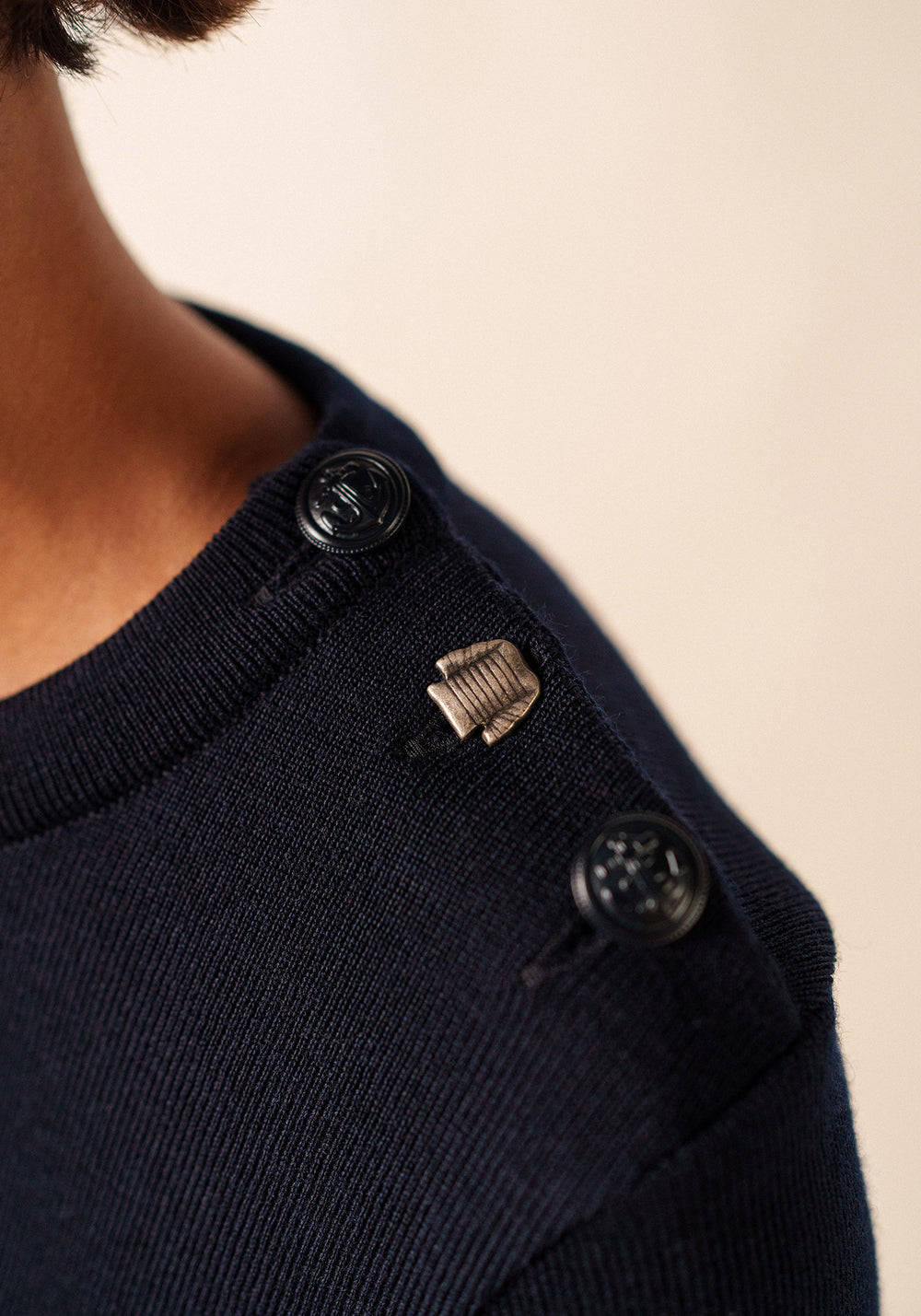
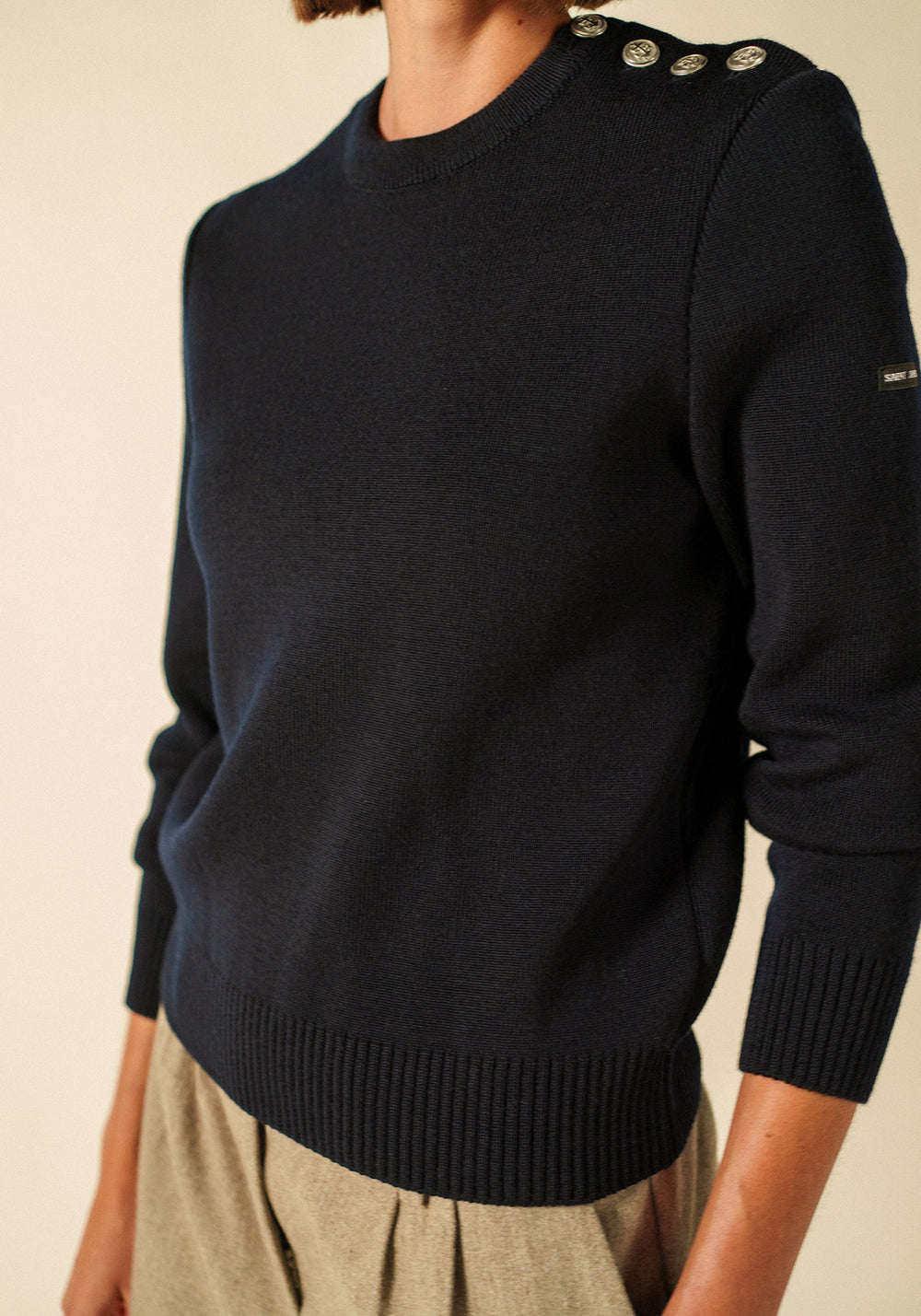
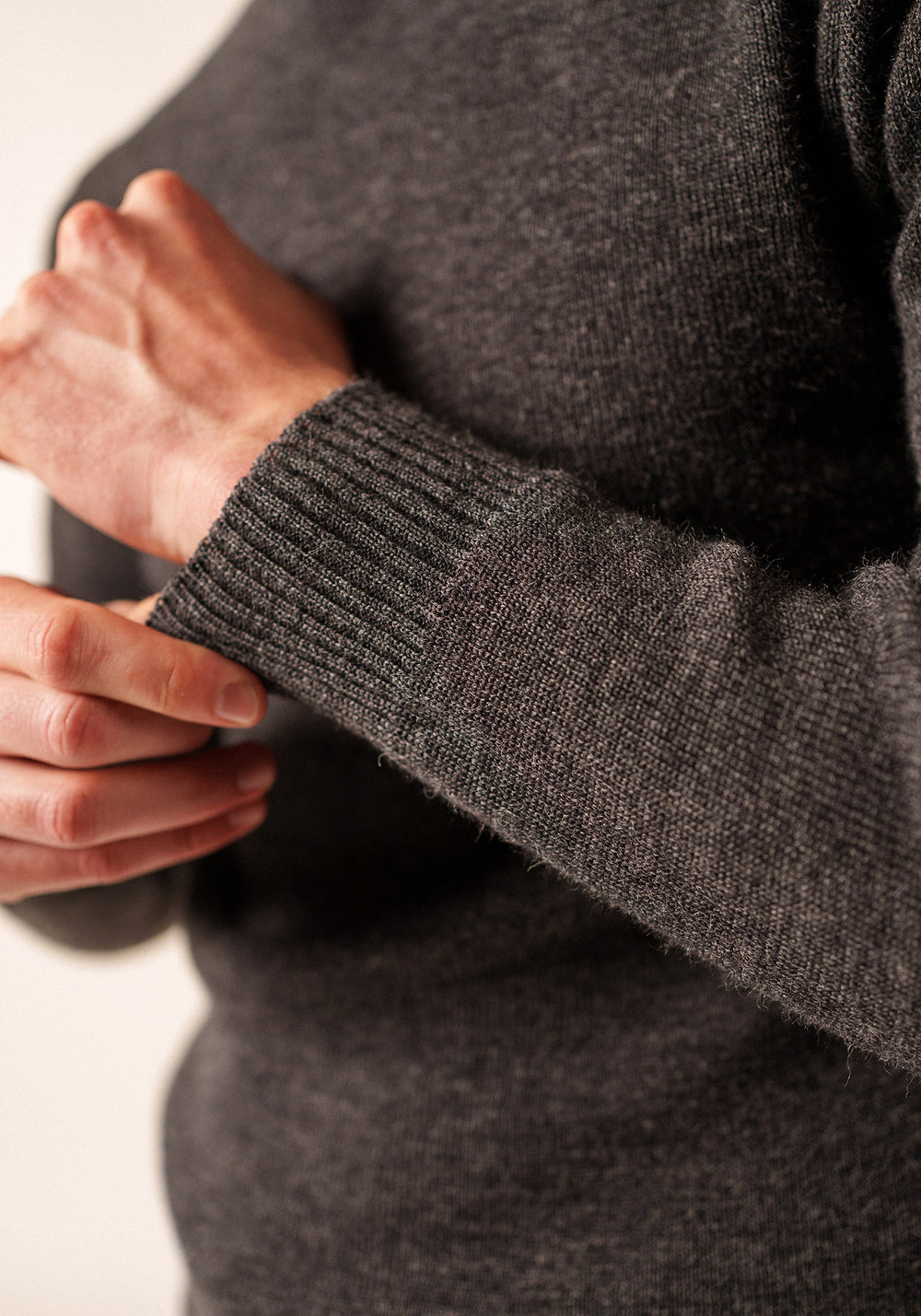
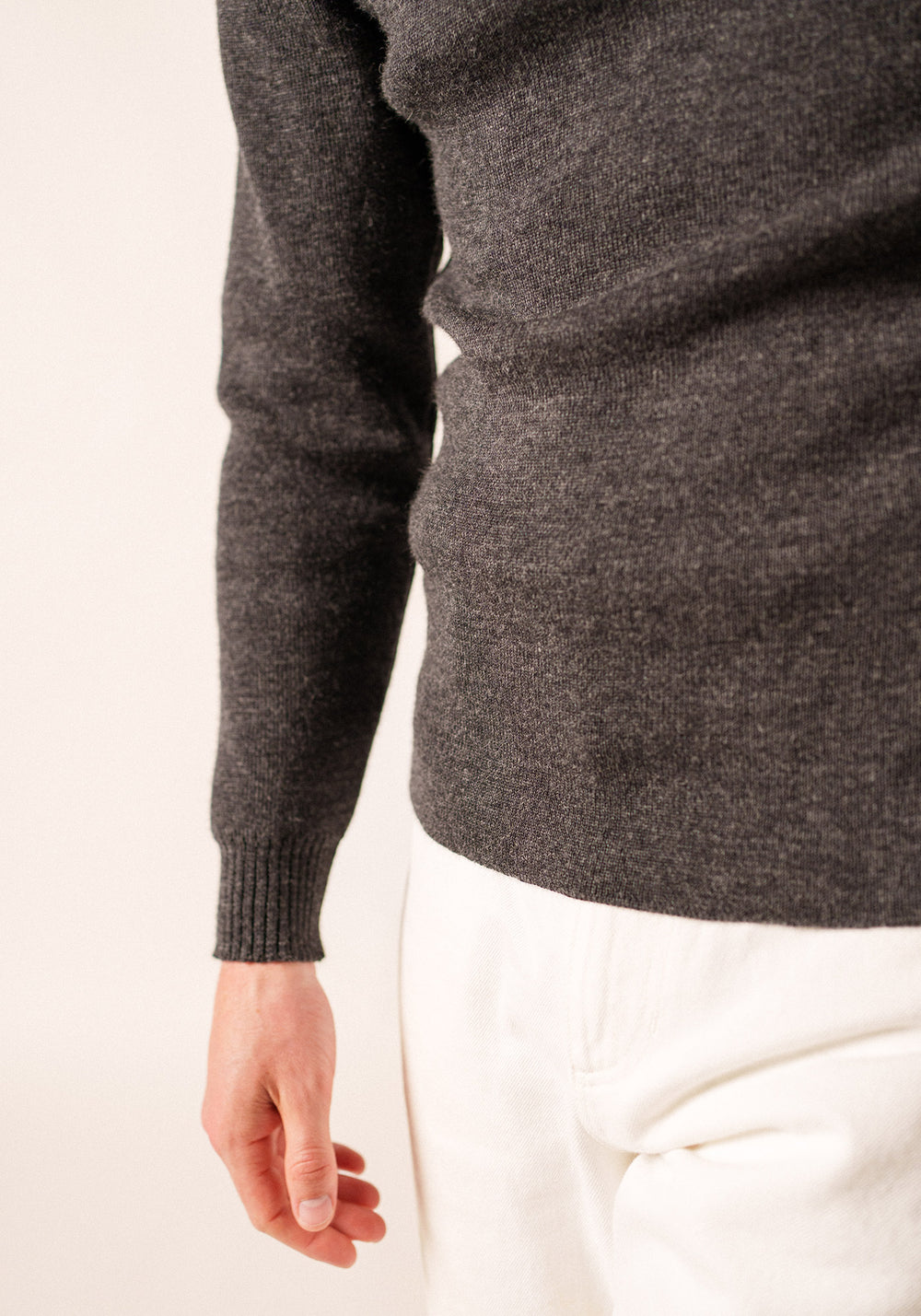
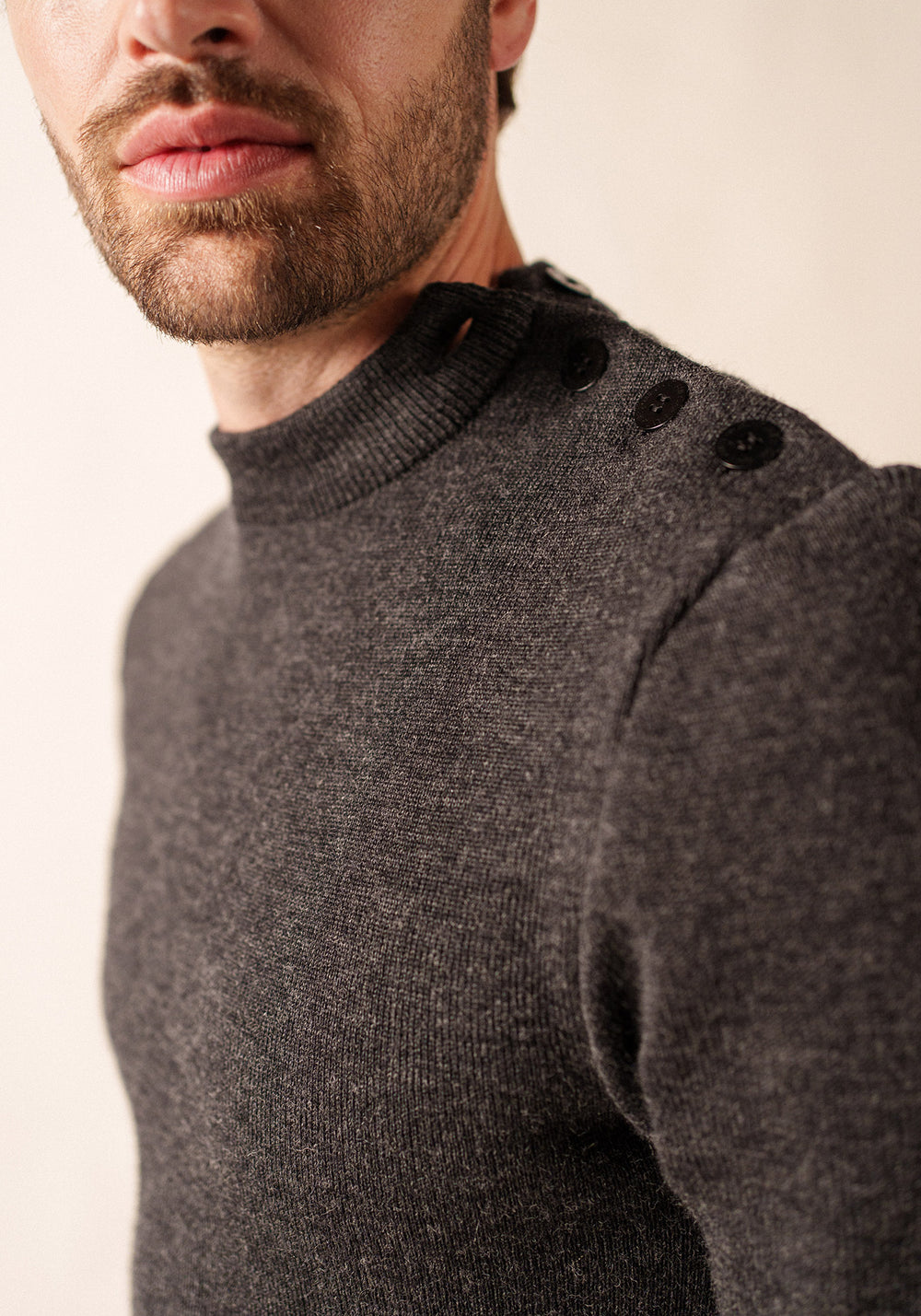
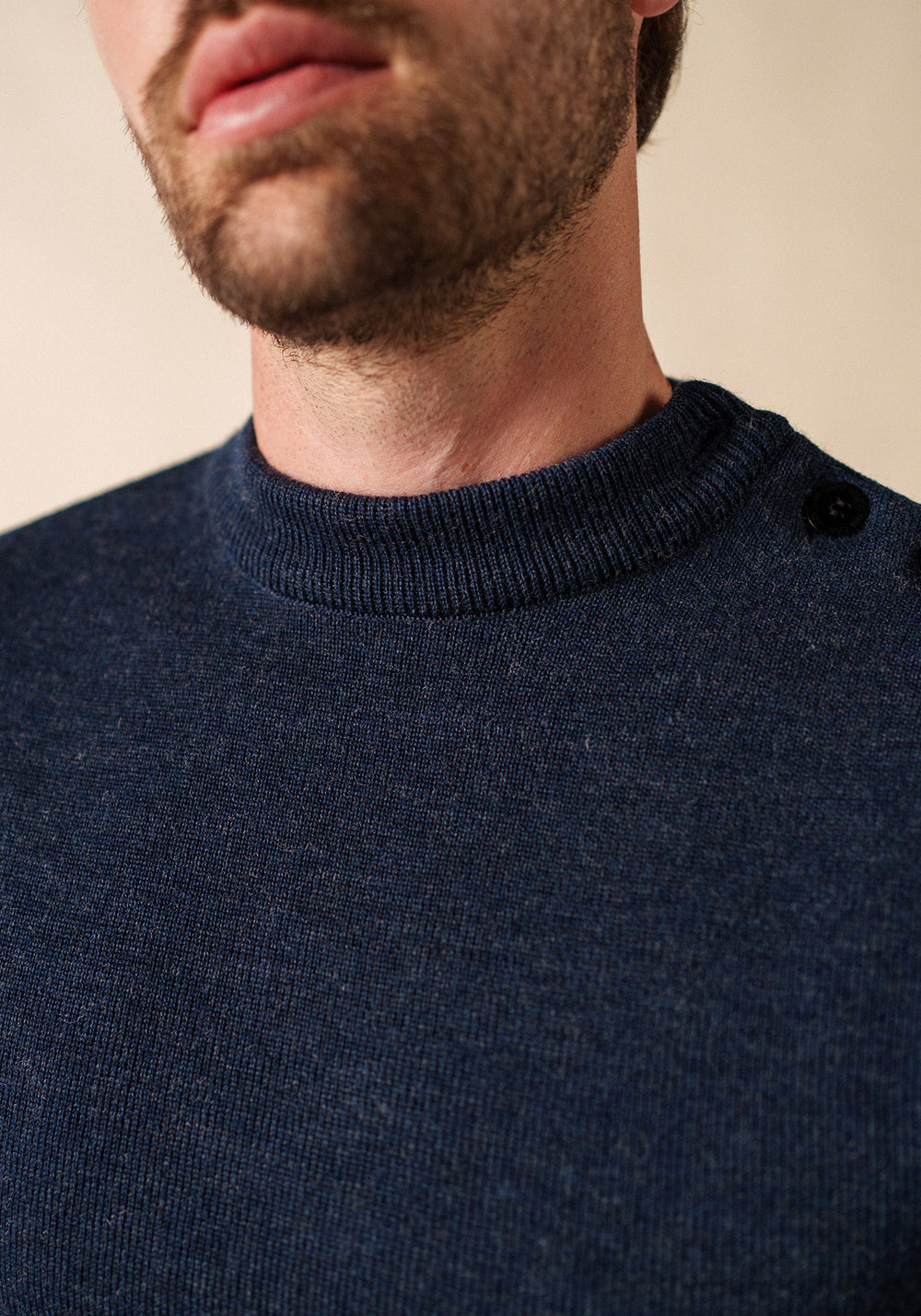
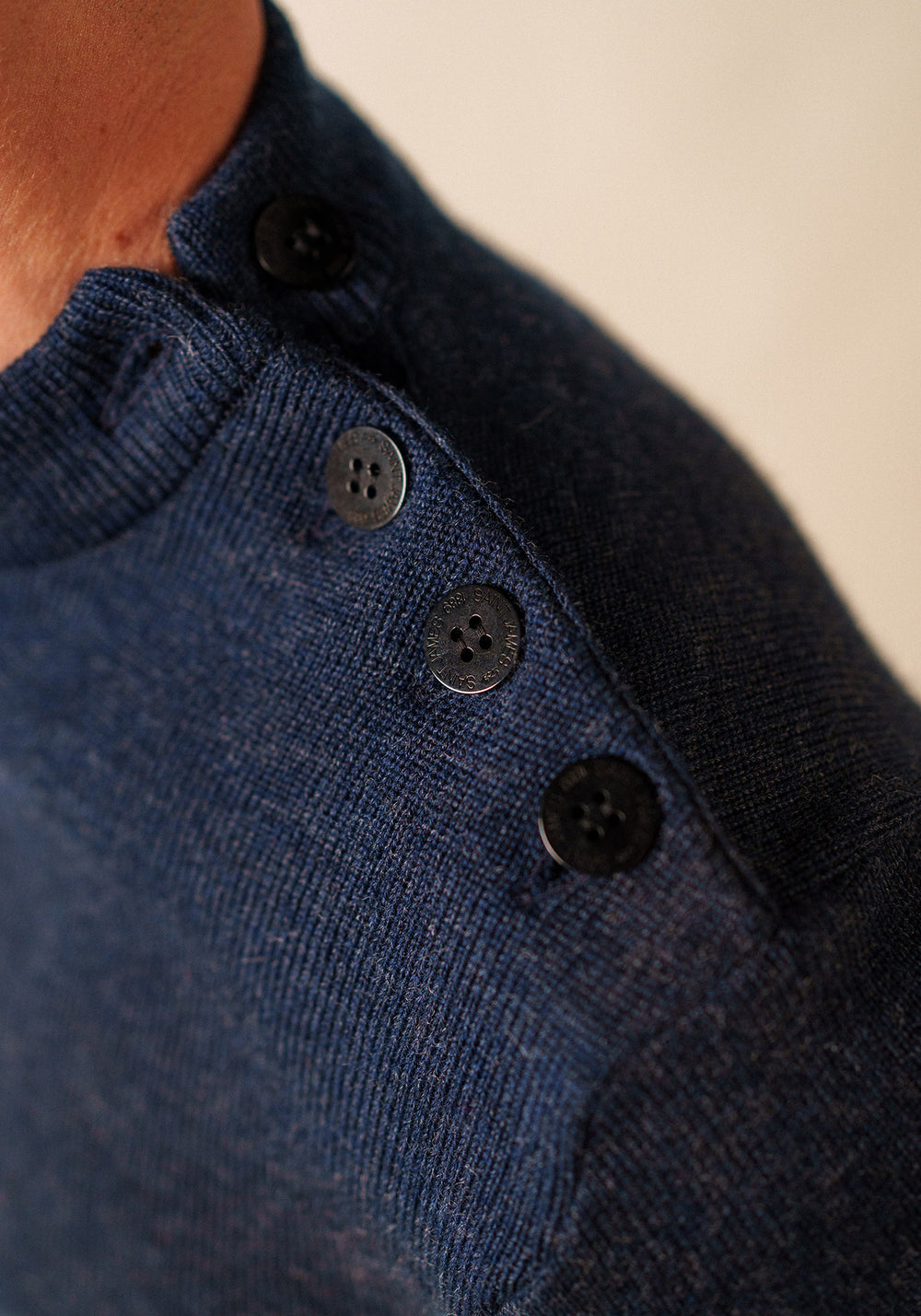
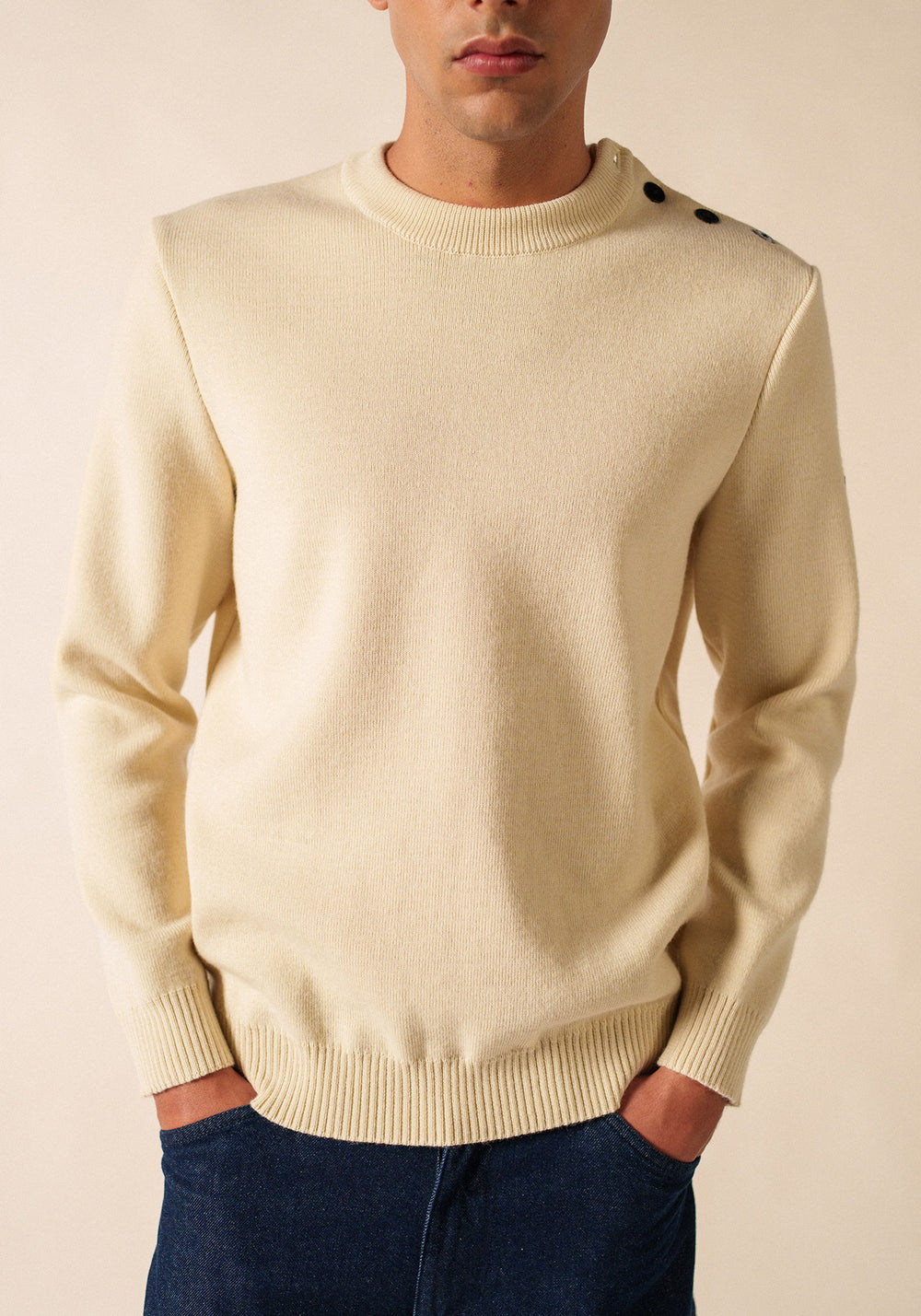
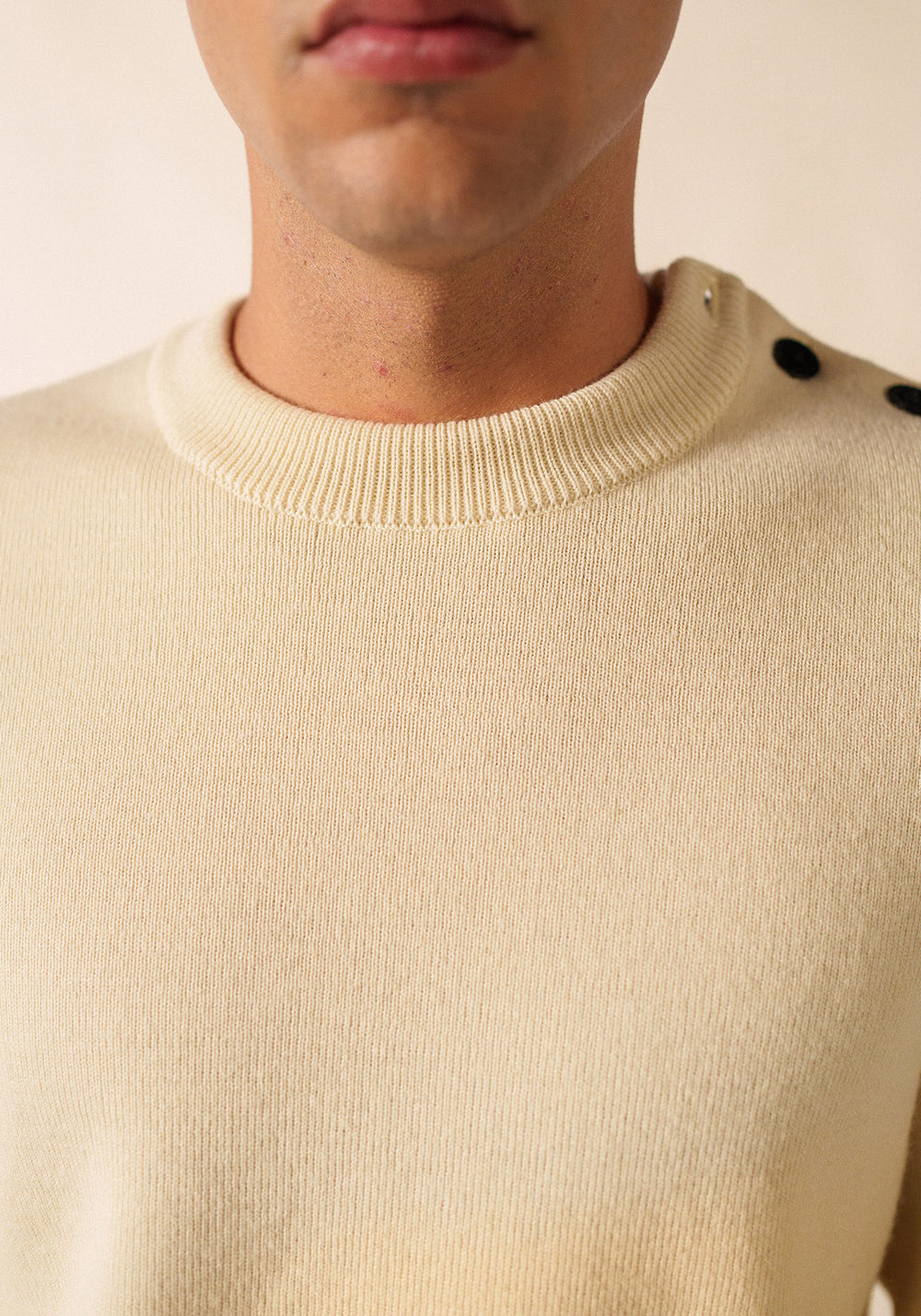
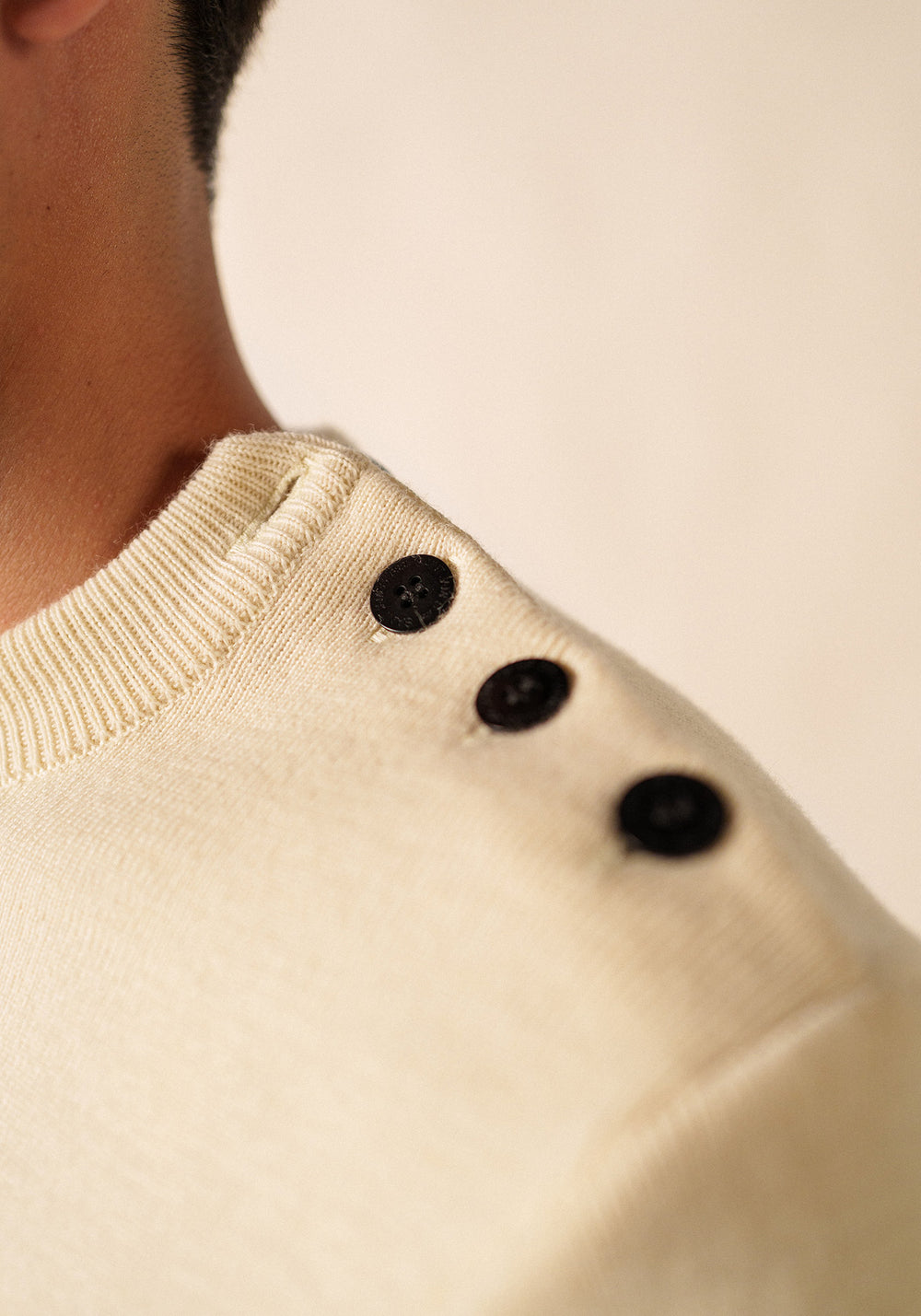
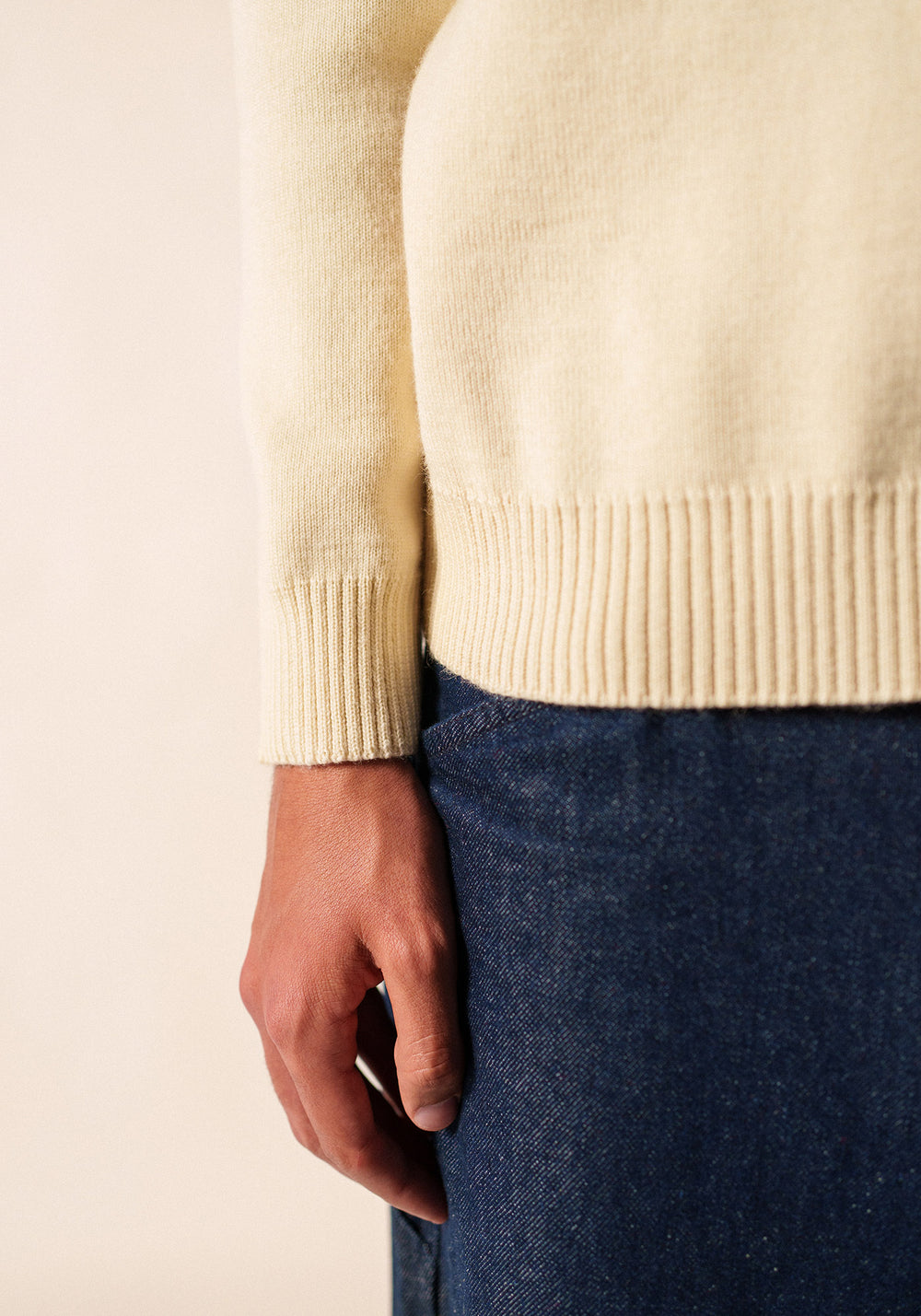
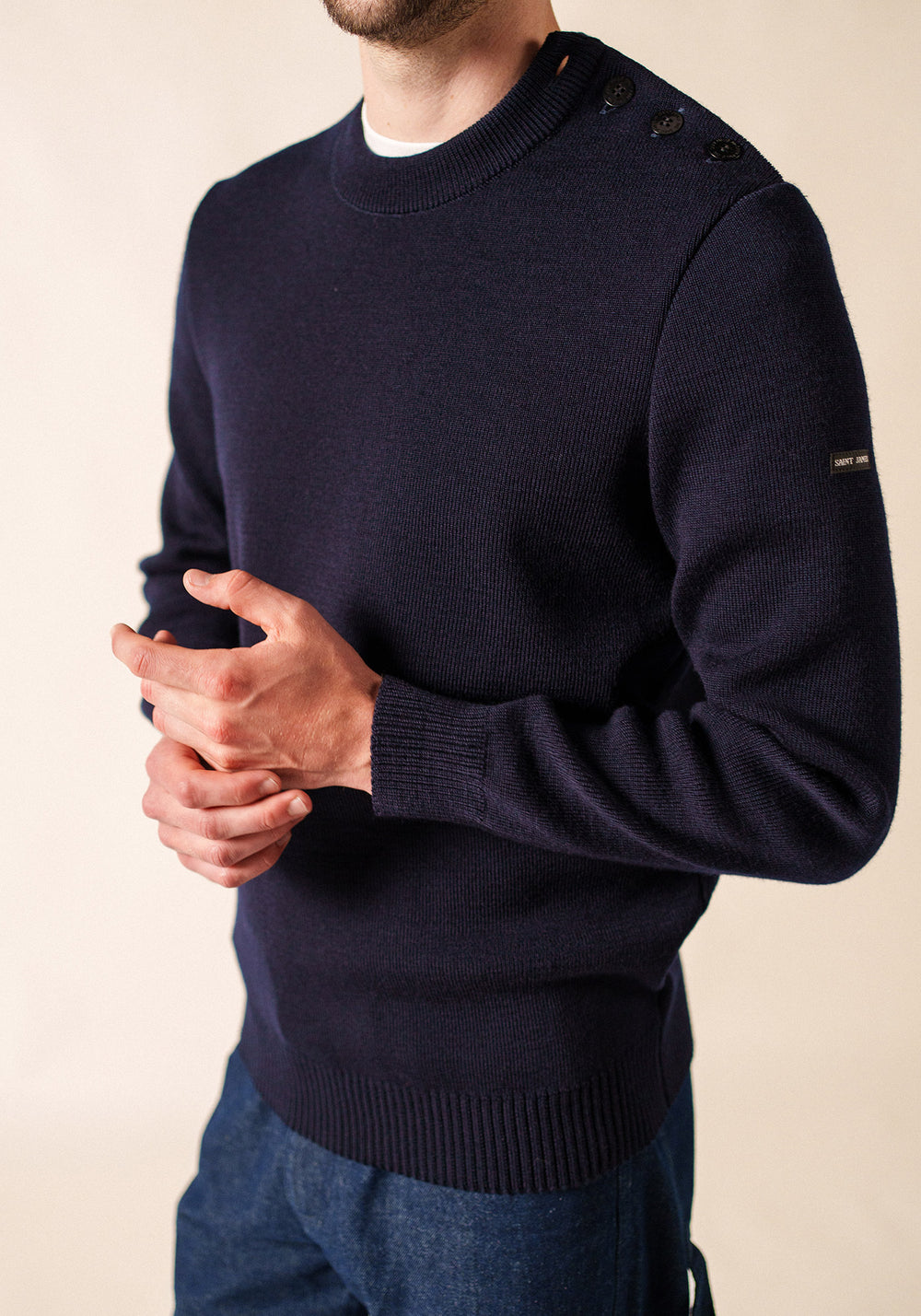
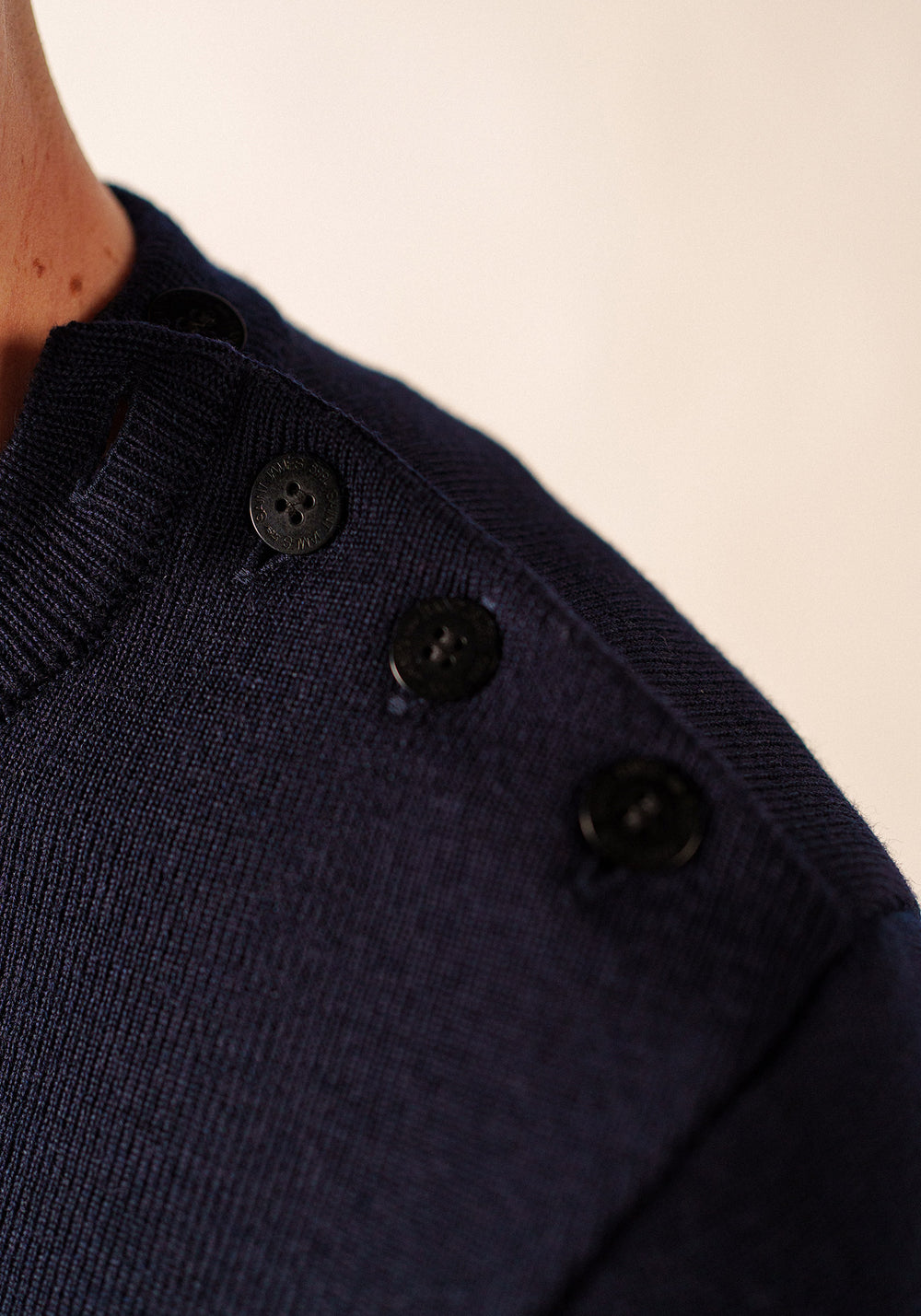
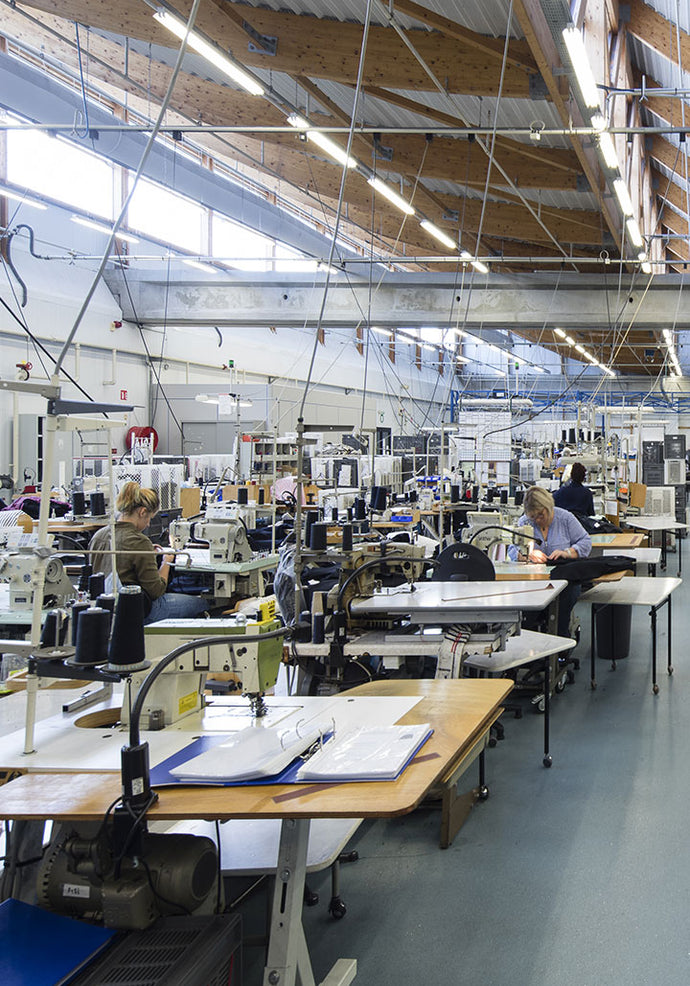
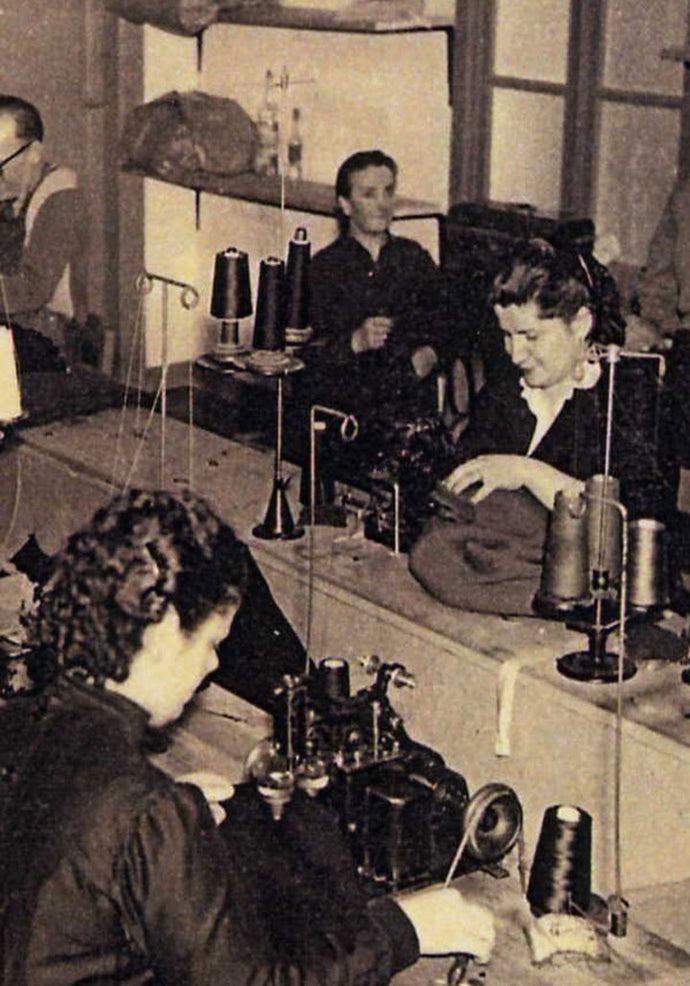
Once the panels are knitted and stabilized, the next stage is cutting, meticulously executed along precise patterns to ensure perfect symmetry and fit. Following this, our skilled seamstresses assemble the panels with unparalleled expertise. They perform stitching, overlocking, and remeshing, carefully finishing the buttoned bands and collar to maintain the jumper’s elasticity and shape.
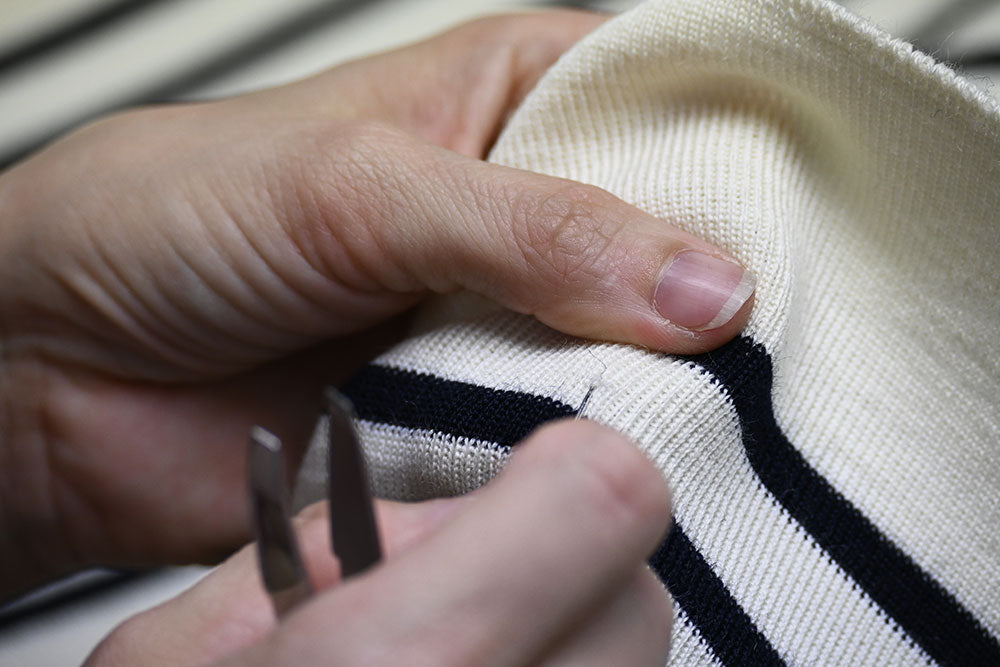
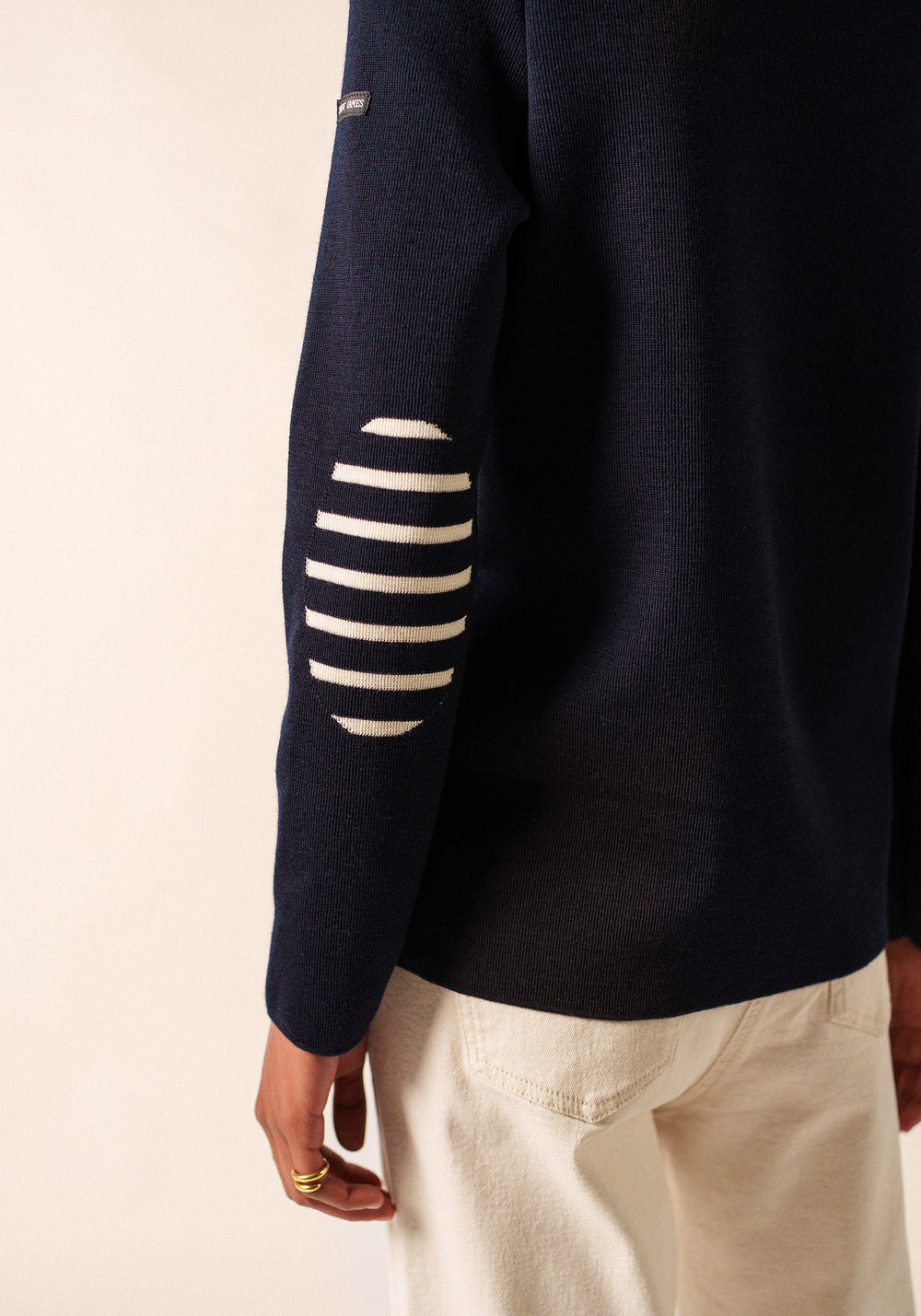
Every garment is adorned with the SAINT JAMES labels, crest, and logo, signifying authenticity and craftsmanship. The jumper then undergoes rigorous Quality Control, where even the smallest imperfection is detected. Any defect leads the garment to the raccoutrage workshop, where our mending experts repair or refine the piece to perfection.
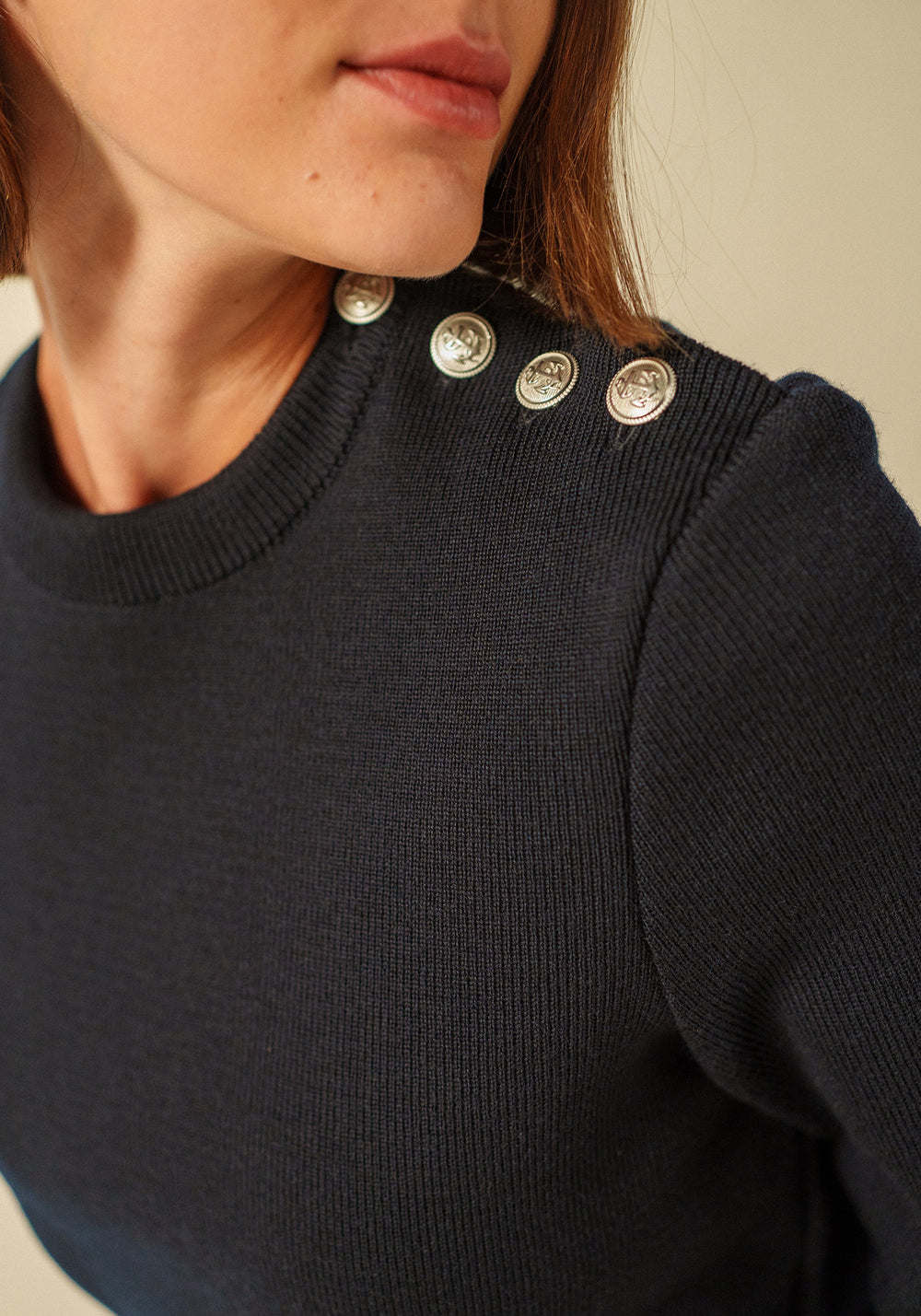
Final touches include the placement of buttons and buttonholes, followed by ironing and packaging, ensuring the jumper is ready for shipment in impeccable condition.
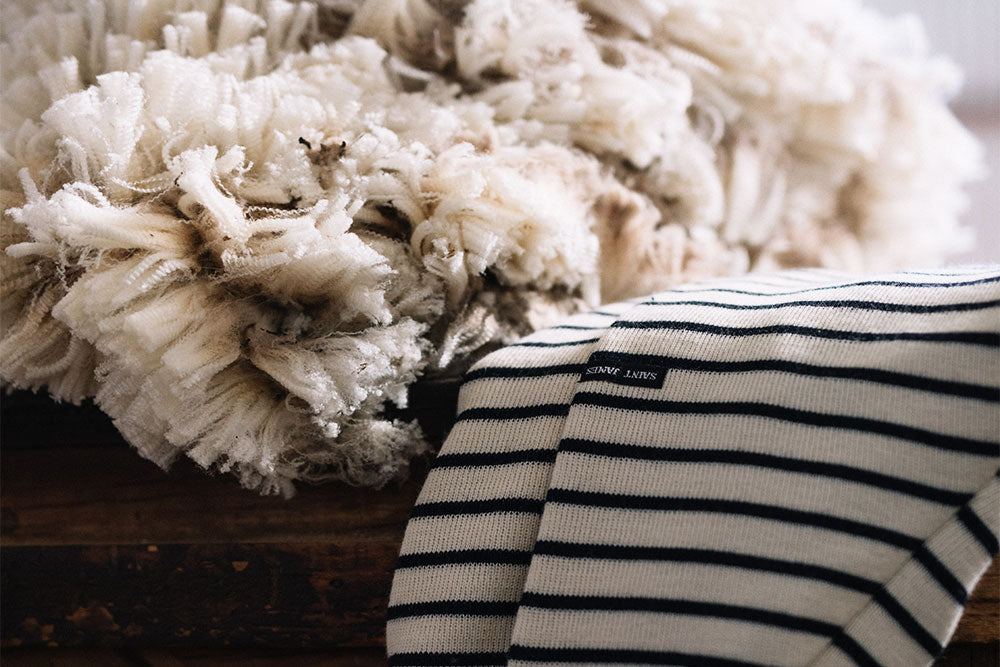
As with all wool garments crafted in our workshops, the Matelot jumper is Woolmark certified. This prestigious certification guarantees that the garment is made from 100% pure new wool, sourced from the finest sheep, with no blending of lower-quality fibers.
Merino wool qualities make it the wool of choice for SAINT JAMES
We traditionally use Merino wool, obtained from the shearing of Merino sheep, mainly raised in Australia, New Zealand, and South America. It is an exceptionally soft and supple fiber, which is as elastic as it is resistant.
It has thermoregulatory properties: it is insulating while being breathable, which allows you to retain body heat in winter without sweating as soon as the sunny days arrive.
Like other pure new wools, Merino wool can absorb up to 30% of its weight in water without being wet to the touch. This characteristic, which sailors were particularly suited to test, also allows the wool to dry quickly. Hence the reputation of an almost waterproof jumper.
We also use cashmere for some of our designs in combination with other fibers. This incredibly soft fiber comes from the undercoat of cashmere goats. It is so thin that it takes thousands to make a thread. Cashmere weighs ten times less than wool, and it is also more insulating and warmer.
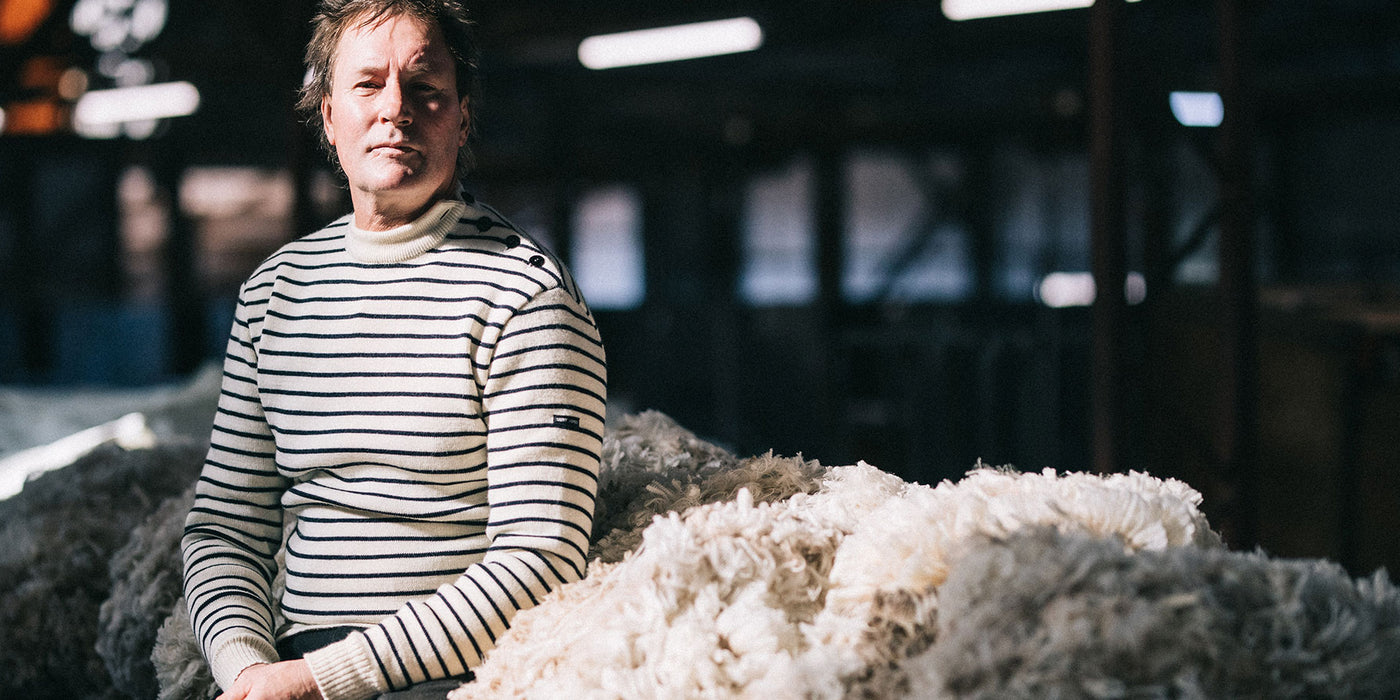
How to take care of your SAINT JAMES wool garment
First, make sure the model you own is machine washable. If this is the case, select a specific wool setting on your washing machine, at 30°c (cashmere should not be washed at more than 30°c). Use a non-chlorinated detergent.
If your washing machine does not have a dedicated wool setting, set the temperature to a maximum of 30°c and the spin cycle to 400 to 500 RPM.
Once washed, your woolen garment should be laid out to dry flat. If you hang it from a line, it may warp under the weight of the water and never return to its original shape.
You can iron it with steam or use position 2 of your iron with a damp cloth between the iron and the garment for dry ironing.